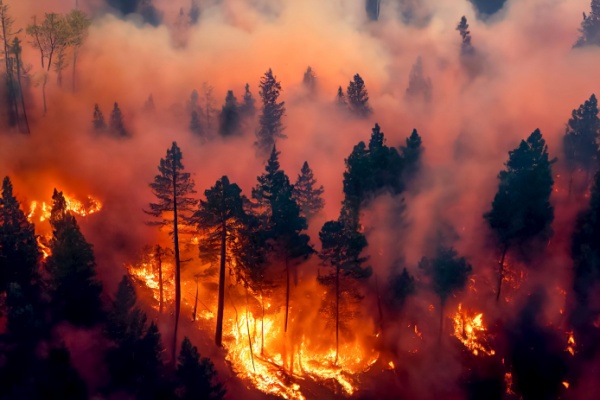
Ongoing drought is expected to worsen and continue raising the wildfire risk across multiple parts of the United States this spring, with vast areas facing heightened drought and fire danger in the weeks ahead.
As AccuWeather reports, abnormally dry to extreme drought conditions persist across the Southeast. A front pushing through the region this weekend will bring only spotty rain from Florida and Louisiana to Virginia, West Virginia and Maryland.
Areas that miss out on weekend rain may not get additional rainfall through much of the upcoming week and possibly into the weekend. Many locations, including Charlotte, New Orleans and Atlanta, have received just 40–60% of their historical average rainfall since Jan. 1. With a strengthening sun, longer days and persistent breezes, soil and vegetation will remain dry or quickly dry out after any greenup without soaking rain across the Southeast and parts of the Plains and West.
Large and expanding pockets of exceptional drought—the driest category on the U.S. Drought Monitor—are present in parts of Georgia, Florida, Texas, Arkansas, Colorado and Idaho. An elevated wildfire risk will persist across inland areas of the Southeast after any showers move out. Farther west, portions of the Plains will face multiple days of elevated fire risk as temperatures rise and winds increase.
As a Pacific storm approaches California with rain and thunderstorms, gusty winds ahead of the system will develop across the interior Southwest. Dry ground, lingering dead winter brush and slow new growth due to a lack of rain and snow will contribute to multiple days of elevated wildfire risk across the Southwest.
The wildfire risk zone is forecast to gradually shift east by midweek. As the Pacific storm progresses east, fire risk will return to the Plains ahead of potential severe thunderstorms. A very high fire risk could develop later in the week, as strong winds may cause small brushfires to spread rapidly and grow quickly.
Where dry brush is present, people are urged to avoid using power equipment or open flames, as sparks and embers could quickly ignite fast-moving wildfires. Local restrictions may already be in place due to worsening conditions.
—
Photo Credit: Vikks / Shutterstock.com
