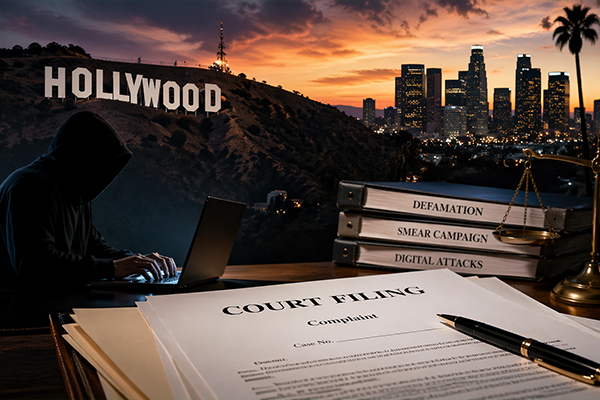
A widening legal battle is pulling back the curtain on what plaintiffs describe as a coordinated network of anonymous smear campaigns operating within the entertainment industry.
The controversy, which first surfaced earlier this year, has grown into a multi-layered dispute involving publicists, attorneys and high-profile industry figures. At its center are allegations that a loosely connected group orchestrated digital attacks designed to damage reputations through unverified and often severe claims.
The issue came to light through litigation tied to the upcoming It Ends with Us case involving Blake Lively and Justin Baldoni. A lawsuit filed by publicist Stephanie Jones introduced the idea of a structured ecosystem of anonymous websites working in tandem with social media accounts to amplify damaging narratives about specific individuals.
Actress and activist Alexa Nikolas later filed a separate complaint, alleging she was among the targets of such campaigns. According to the filings, these operations relied on coordinated posting strategies and search engine manipulation to ensure that defamatory content gained visibility and credibility online.
A recent update to Nikolas’ complaint suggests that these tactics may extend beyond isolated incidents. Her legal team points to connections between her case and financier Peter Comisar, who previously clashed with music executive Scooter Braun in a high-stakes financial dispute. The overlap, they argue, indicates a consistent strategy used against multiple individuals across different conflicts.
Comisar’s earlier lawsuit alleged that Braun and his associate David Bolno hinted at launching efforts to undermine his reputation. In the years since, various websites and online profiles have surfaced raising questions about his background, echoing the broader pattern described in the newer filings.
Braun, a prominent figure in the music industry known for managing global stars and later expanding into corporate leadership through Hybe, has not commented on the latest developments. His business dealings and past disputes are now being reexamined in light of these emerging claims.
The controversy also appears to intersect with tensions in the K-pop industry. Min Hee-jin, a former executive tied to Hybe, has publicly suggested that similar digital tactics may have been used against her during her own legal conflict with the company. Her comments add another dimension to a case that is increasingly spanning multiple sectors of the entertainment world.
Despite the growing number of allegations, those accused of involvement have either denied the claims or declined to respond publicly. Attorney Bryan Freedman has previously dismissed the accusations as speculative, maintaining that there is no evidence linking him or his associates to any coordinated smear activity.
As the various lawsuits move forward, the cases are beginning to expose what plaintiffs describe as a modern playbook for reputational warfare. The outcome could have significant implications not only for the individuals involved but also for how digital influence and anonymous publishing are regulated within the entertainment industry.
