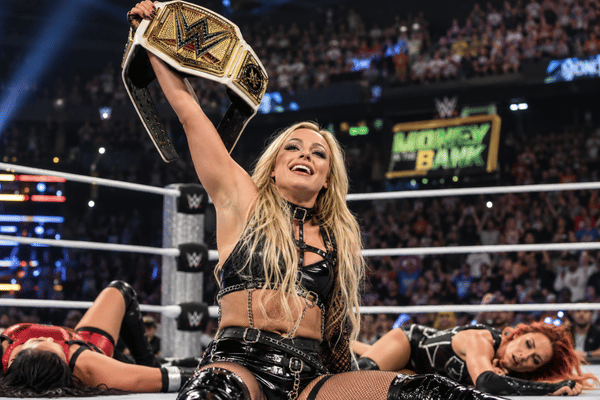
Liv Morgan is back at the top of WWE’s women’s division, but her latest championship victory has sparked a familiar debate about the direction of Monday Night Raw. Morgan captured the Women’s World Championship at Money in the Bank on October 10 in New Orleans, overcoming Stephanie Vaquer and Becky Lynch in a Triple Threat match. The victory marked her fourth reign with the championship and continued a rivalry that has repeatedly shifted the title between Morgan and Vaquer.
While another championship adds to Morgan’s growing list of accomplishments, the decision also brings renewed attention to WWE’s handling of Vaquer, whose latest title reign ended after just 28 days.
Vaquer regained the championship from Morgan during a WWE live event in Santiago, Chile, on September 12. The victory was especially meaningful because it happened in her home country, giving the Chilean superstar a memorable moment in front of her supporters. However, that momentum proved short-lived.
At Money in the Bank, Morgan reclaimed the championship after delivering her Oblivion finishing move to Vaquer. The result returned the spotlight to an established champion while leaving questions about what comes next for the former titleholder. The championship has been central to both women’s careers throughout 2026. Morgan defeated Vaquer at WrestleMania 42 in April, beginning another reign before losing the title in September.
Their repeated championship encounters have established a prominent rivalry, but the rapid changes have also created a challenge for WWE’s creative direction. Vaquer entered the main roster with considerable momentum following her success in NXT, where she became a simultaneous holder of the NXT Women’s Championship and NXT Women’s North American Championship. Her accomplishments positioned her as an important addition to Raw’s women’s roster, and her championship victories demonstrated WWE’s willingness to feature her at the highest level.
Yet the brevity of her latest reign raises a legitimate question about how effectively the company is developing its newer main-event talent. Morgan, meanwhile, remains one of WWE’s most recognizable female performers. Her championship history and association with The Judgment Day have helped establish her as a consistent presence in major storylines. Her latest victory further strengthens that position, although another title reign does not automatically guarantee a more compelling championship picture.
For WWE, the challenge extends beyond choosing between Morgan and Vaquer. A successful women’s division requires meaningful rivalries, credible challengers and opportunities for multiple performers to establish themselves.
Becky Lynch’s involvement in the Money in the Bank match demonstrated the star power available to Raw, but the division’s future will also depend on how WWE develops contenders outside its familiar championship rivalries. Frequent title changes can generate excitement, particularly when they occur at major events or in unexpected circumstances. However, those moments can lose some of their impact if championship reigns end before meaningful stories have time to develop.
Vaquer’s short reign illustrates that concern. Her victory in Chile provided a significant career moment, but her subsequent loss leaves WWE with the task of maintaining her credibility as a championship contender.
Morgan now has another opportunity to lead the division as champion. Whether this reign offers fresh rivalries and stronger character development will be an important measure of its success.
The result at Money in the Bank may have settled the championship contest, but it has done little to settle the larger discussion about Raw’s women’s division.
With Morgan once again holding the gold, WWE must decide whether to continue revisiting established rivalries or use its championship picture to elevate a broader group of competitors. That decision could ultimately matter more than the latest title change itself.
