After another brutally hot summer, cooler, shorter days — and pumpkins — are on our doorstep. The autumnal equinox arrived Sunday, marking the end of astronomical summer and the first day of fall in the Northern Hemisphere.
This year, on Sept. 22, the center of the sun will be directly over the equator at 8:05 p.m. EDT, according to TimeandDate. In the Northern Hemisphere, the sun will appear lower in the sky, and the days will continue to grow shorter until the winter solstice on Dec. 21.
What happens at the Fall Equinox?
The autumnal (or fall) equinox is the halfway point between the summer and winter solstices. Like the spring equinox in March, it is one of only two times of the year when the sun is directly over the Earth’s equator and day and night are nearly equal everywhere on Earth.
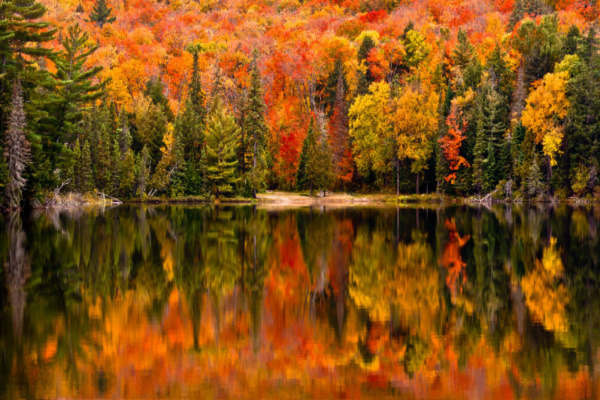
During the September equinox, the sun’s direct rays cross Earth’s equator into the Southern Hemisphere, where winter is transitioning to spring. In the Northern Hemisphere, we’ll continue to lose daylight until the winter solstice, as the sun traces a shorter and lower path across the sky. The reduced sunlight is the main reason trees change color before dropping their leaves for the winter.
The location of sunrise and sunset will also shift closer to the southern horizon until December. During an equinox, the sun rises due east and sets due west everywhere on Earth except near the North and South poles.
When does fall officially begin?
Though the autumnal equinox is often referred to as the “first day of fall,” there are different ways to define the seasons. Astronomical seasons are marked by the solstices and equinoxes, with fall beginning on the autumnal equinox and ending on the winter solstice. Meteorological fall, on the other hand, begins Sept. 1 and ends on Nov. 30.
Equinoxes and seasons happen because the Earth doesn’t orbit the sun completely upright. Instead, Earth’s axis is tilted from the vertical by about 23.5 degrees, which causes the Northern and Southern Hemispheres to receive different amounts of sunlight throughout the year. On the spring and autumnal equinoxes, however, both hemispheres receive equal amounts of sunlight, and therefore day and night are nearly equal everywhere on Earth.
Why are day and night not exactly equal?
The term “equinox” comes from the Latin words “aequus” (equal) and “nox” (night). While everyone on Earth sees about 12 hours of daylight, day and night are not perfectly equal. In fact, no matter where you live, the sun is above the horizon for slightly more than 12 hours on the equinox.
There are two reasons we see more than 12 hours of daylight on the equinox: One is that Earth’s atmosphere refracts, or bends, light. This allows us to see the sun at sunrise and sunset even when it is technically below the horizon.
The second reason is our definition of “sunrise” and “sunset” to measure the length of a day. The sun appears as a large disk, not a tiny, discrete point in the sky like a nighttime star. Sunrise occurs the moment the sun’s upper edge crosses the horizon, while sunset doesn’t happen until the sun’s upper edge completely dips below it. When you watch a sunset, you’ve probably noticed that it takes a few minutes for the sun to fully disappear from the sky.
Together, these two factors — atmospheric refraction and how we measure the length of daytime — add several minutes of daylight to the equinox. Near the equator, the sun is up for 12 hours and 6 minutes, while Earth’s polar regions see more than 12 hours and 20 minutes of daylight.
The day when sunrise and sunset are exactly 12 hours apart is known as the “equilux.” In most of the United States, the equilux occurs on Sept. 25 or 26. Not until March 17 will the sun again grace our skies for at least 12 hours.
How fast are we losing daylight?
We experience our fastest loss of daylight in mid-to-late September, although the rate of change is more dramatic at higher latitudes, farther from the equator. Near the fall equinox, Washington loses 2 minutes and 30 seconds of daylight per day, while Miami loses only 90 seconds. At higher latitudes, the loss of sunlight is more extreme: Seattle’s daylight vanishes by nearly 3½ minutes each day, and in Anchorage, the difference is more than 5½ minutes.
Fall 2026 temperature outlook
An updated seasonal forecast released by NOAA’s Climate Prediction Center on Sept. 17 shows what kind of broad weather patterns every state can expect through the end of the year. The fate of the northern states, it turns out, is quite different from down south.
Much of the country is likely to see warmer-than-normal temperatures this fall, according to the latest outlook. That’s no huge surprise given the supercharged El Niño that’s building toward peak strength. The states with the highest probability of seeing above-average warmth between October and December are those that are furthest north, plus California and Nevada.
A small handful of states – Colorado, New Mexico, Texas, Oklahoma, Arkansas and Louisiana – are not leaning above-average this fall. That doesn’t mean they’ll be seeing cold weather, it just means the forecast is less clear. Those states have equal chances of seeing a warm fall season, a cool fall season, and a normal fall season.
—
Photo Credit: James William Smith / Shutterstock.com
