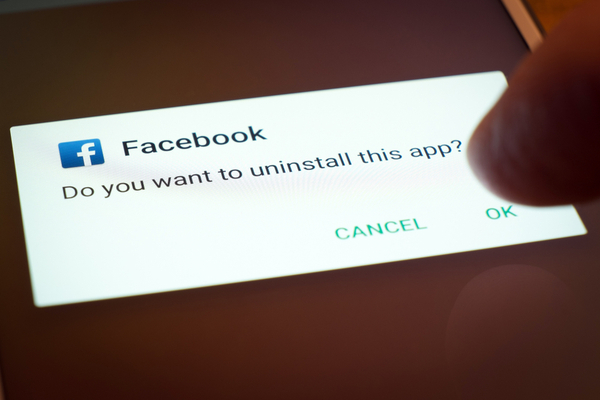
The “Off-Facebook Activity” privacy feature, launched seven years ago as a virtuous exercise in putting Meta users’ choices before its own potential profits, is “going away” this month.
As PCMag reports, that’s the phrase that Facebook users spotted in “Your settings are changing” banners on the social network’s site and mobile apps, plus emails like this one:
“The setting to disconnect your off-Meta activity is going away. You can use the updated Activity from other businesses setting to choose if we use your activity from other apps, websites or offline interactions, such as in-store purchases, to show you relevant ads and now other content. To adjust this setting, go to Your information and permissions in your account settings.”
The Choice to Use or Not Use Your Data, Becomes Theirs
These notifications point to a support note that implies but doesn’t outright say Meta will retain information it previously would have anonymized, with your choice now being whether the company uses that data or not: “If you don’t allow us to use this activity to show you more relevant content, the content we show you will be based on other types of information we collect, such as your activity on our products (for example, liking a reel or post),” Meta says.
“Regardless of your choice, businesses and organizations may send us your activity, and we may anonymize it or use it to improve our products as described in our Privacy Policy.” Asked if that was a correct reading, Meta spokesperson Emil Vazquez pointed to Meta’s June 9 announcement of this change, headlined “Better Personalization and Changes to Controls for Your Activity From Other Businesses.”
That post says this change takes effect in the US plus “a number of other countries” starting in July, as in, this month. It’s explained as a condensation of current settings for “Your activity off Meta technologies” and “Activity from other businesses” that does not involve Meta gathering any new data.
“Instead of maintaining two settings that cover similar ground, we’re streamlining our controls and will no longer offer the ‘Your activity off Meta technologies’ setting that lets you disconnect activity that businesses share with us from your account,” Meta says. “As part of this update, we’re also expanding the ‘Activity from other businesses’ setting, which lets you control how we use this data to personalize your experience.”
The History and Reason Behind the Off-Facebook Activity Setting
In September 2019, the company, then known as Facebook, introduced the “Off-Facebook Activity” setting, more than a year after announcing plans for an option to let users clear Facebook’s records of their web browsing. It rolled out worldwide in January 2020.
Facebook’s 2019 announcement pitched this as an elevation of privacy over profit: “If you clear your off-Facebook activity, we’ll remove your identifying information from the data that apps and websites choose to send us. We won’t know which websites you visited or what you did there, and we won’t use any of the data you disconnect to target ads to you on Facebook, Instagram or Messenger. We expect this could have some impact on our business, but we believe giving people control over their data is more important.”
Meta’s corporate site still lists its introduction of this setting on an “Integrity Timeline” page. But that page, last updated on May 2, 2023, lists many other things that Meta probably no longer wants to talk about, like its now-shuttered fact-checking program and its since-repealed ban of President Trump from Facebook and Instagram after the Jan. 6, 2021, insurrection. So, don’t be surprised if someday you can only read it via the Internet Archive.
This Does Not Mean Facebook is Secretly Listening to You
Meta can follow you around the web via the “Like” and “Share” buttons that used to be nearly ubiquitous, its “pixel” tracking cookies, and embeds of Facebook and Instagram posts.
But let’s be clear: this does not mean that Facebook’s apps are secretly listening to you. Android and iOS have long blocked clandestine microphone access at the system level, and even if Meta developers had engineered some evil workaround, it’s implausible that nobody at this notoriously leaky company would have already tipped off the press and regulators.
If you don’t want to delete your account, privacy-optimized browsers (as in, not Chrome) can stop some of that surveillance. Apple’s Safari, for example, began blocking Facebook tracking via those embeds in 2018, and Firefox made a similar feature its default later that year.
—
Photo Credit: D K Grove / Shutterstock.com
