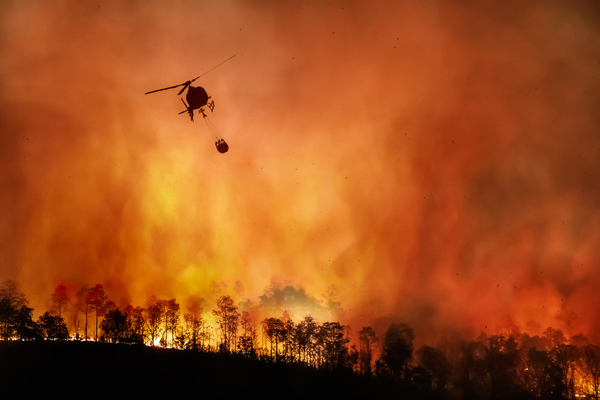
Months of summer heat, sunshine, and limited rainfall have dried vegetation and depleted soil moisture across much of the western and south-central United States, increasing the risk of wildfires.
As AccuWeather reports, damaging fires this summer in Utah, Oregon, Washington, Nevada, and west of Fort Worth, Texas, show how quickly flames can spread through tinder-dry vegetation, whether sparked by arson, an accident, or lightning.
The Hawk Fire erupted northwest of Reno, Nevada, over the weekend and rapidly burned more than 15,000 acres and almost three dozen homes, according to InciWeb. Officials determined that the fire was human-caused, but the exact cause remained under investigation.
The Ross Fire erupted west of Fort Worth on Monday and rapidly grew to 50,000 acres by Tuesday morning, according to the Texas A&M Forest Service. The fire was only 5% contained.
Blazing sunshine, gusty winds, relative humidity below 25% and record-breaking temperatures of 100 to 110 F contributed to the extreme fire conditions. The cause remained under investigation.
In early August, several fires near Spokane destroyed more than 800 buildings. Authorities have charged a man with deliberately setting multiple fires, while Spokane County officials estimate that the damage will exceed $1 billion.
Widespread drought from the High Plains to the interior West has left vegetation increasingly susceptible to ignition and rapid fire spread.
Sporadic showers dampened parts of north-central Texas Tuesday, but most locations received little meaningful rainfall. As of Tuesday, Dallas had gone at least 40 consecutive days without measurable rain. Intense heat and limited thunderstorm activity will maintain a high wildfire risk across much of the interior West and Texas through the end of the week.
Widespread highs in the mid-90s to low 100s are forecast this week, with temperatures in some deserts of Utah, Nevada, Arizona and California reaching the 110s. As temperatures climb during the day, humidity levels will plummet and winds may increase. These conditions can allow fires sparked by power equipment, discarded cigarettes or open flames to spread rapidly.
“Late this week and weekend, a dip in the jet stream will develop in the Northwest, bringing much lower temperatures to Washington and western Oregon,” AccuWeather Senior Meteorologist Brett Anderson said. “The pattern will bring sporadic showers, storms and much lower temperatures, but it will also kick up winds that can fan the flames of existing fires,” he added.
Some of the cooler air will reach the desolate Black Rock Desert in northwestern Nevada, where the week-long Burning Man festival begins on Sunday. Highs are forecast to be in the more tolerable 80s during much of next week. Aside from the potential for spotty thunderstorms next week, smoke could be a factor if fires erupt in vegetated areas, even hundreds of miles away.
As the weather pattern changes, showers and thunderstorms may become more frequent across parts of the West next week. Where storms produce little rain, the wildfire risk will remain moderate to extreme. Lightning from dry thunderstorms could also spark new fires.
—
Photo Credit: Toa55 / Shutterstock.com
