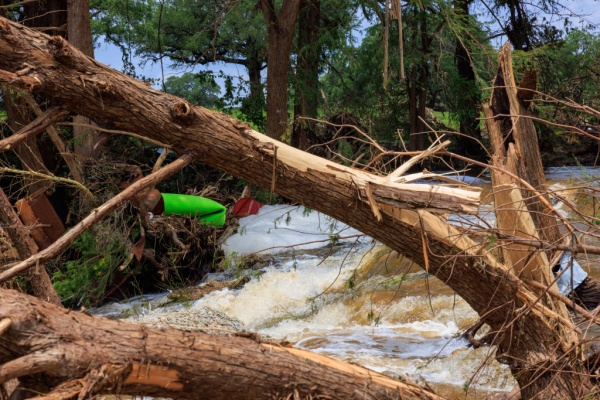
Over the weekend, as Americans celebrated the country’s 250th Anniversary with celebrations, BBQ’s and fireworks, the date meant something completely different for residents of Texas Hill Country. July 4 marked one year since more than 100 people were killed and thousands were displaced by one of the deadliest weather disasters in modern Texas history.
As AccuWeather reports, on that morning in 2025, a dangerous combination of meteorological conditions contributed to persistent, heavy rainfall producing seven months’ worth of rain in less than two hours in parts of the Central Texas Hill Country, and the Guadalupe River rose nearly 30 feet in about an hour due to the intense rainfall.
The deadly wall of water swept away homes, camps and RVs along the river. At least 139 people were killed statewide, including 119 in Kerr County, and thousands of homes were damaged or destroyed. Many of the victims were children who were camping with their families or attending summer camp along the river.
One Year Later, Recovery is Still Ongoing
Ahead of the one-year mark, the Community Foundation of the Texas Hill Country said recovery is still ongoing. The flooding caused an estimated $18 billion to $22 billion in damage, according to AccuWeather experts.
“Families are returning home. Children and adults are receiving mental health support. Small businesses are reopening and optimistic,” The Community Foundation CEO Austin Dickson said. “Parks, community spaces and river projects are moving forward. New partnerships and systems have been built that did not exist before the flood.”
The Community Foundation said 228 flood-affected households have returned to their homes or are progressing toward permanent housing. Memorial events across Kerr County and the Hill Country were focused on community, prayer and healing.
For a region still rebuilding from unimaginable loss, the anniversary is both a moment of mourning and a reminder of how far the Hill Country has come.
Investigations
As My San Antonio reports, following the Fourth of July floods in Kerr County, a number of federal and state investigations were launched.
State and local leaders almost immediately came under scrutiny in the hours after the natural disaster, with calls for county leaders to be condemned for turning down funds that would have gone toward river warning sirens within the last decade, according to the Texas Tribune.
That finding helped fuel a broader look into the accountability of other local leaders, who sat before state officials at a joint hearing to discuss what occurred during the deadly early-morning flooding and whether their actions after flood alerts were issued amounted to negligence and a greater loss of life. During the late-July 2025 hearing, it was confirmed that Kerr County’s sheriff, Larry Leitha, and its emergency management director, William “Dub” Thomas, were asleep during the flood.
Kerr County Judge Rob Kelly was out of town on the night of the flood but testified that locals had little warning of the impending disaster.
Camp Mystic and lawsuits
In June 2026, state investigators published key findings from their investigation into the allegations against the 100-year-old Camp Mystic girls’ summer camp.
The joint investigation found that the camp failed to adequately prepare for the storms, lacked written emergency plans that met state requirements, and did not evacuate campers despite having “ample opportunity to do so.” The popular Texas summer camp was not allowed to reopen for the upcoming summer season following last year’s deadly tragedy and recently filed for bankruptcy.
A total of 25 campers and two camp counselors were killed in the flood. Camp owner Dick Eastland also died while loading campers into his Chevy Tahoe.
A number of lawsuits have been filed as a result of the flood, including suits against Camp Mystic, the Texas Department of State Health Services and another luxury campground where victims were killed in the flood.
Improving river safety and changes in legislation since Texas floods
Since the natural disaster, Hill Country leaders along the Guadalupe have worked to improve river safety and rebuild from the devastation. Local leaders have installed new river gauges and sirens in Kerr and Bandera counties to better warn those on the floodplain of impending natural disasters.
Following the floods, state lawmakers also passed the Heaven 27 Camp Safety Act, which improved safety standards and made it illegal for children’s camps to be located along FEMA floodplains; the Youth Camp Alert, Mitigation, Preparedness, and Emergency Response (Youth CAMPER) Act, which required camps to adopt annually updated emergency plans, train staff and notify parents of floodplain risks; and Senate Bill 3, which created a grant program to help cities and counties pay for early-warning sirens in areas prone to flash-flooding.
Here’s what has not changed
The catastrophic Texas flood will have a lasting impact on the Texas Hill Country. Over the past twelve months, officials have worked to improve safety in the area through new warning measures, legislation, and greater awareness of risks.
Despite these efforts, Hill Country rivers often rise quickly, and the region remains among the most dangerous and flash-flood-prone in the United States. Additionally, as the estimated risk has risen and insurance companies are raising rates, thousands of Texas residents are faced with the decision of having to cancel flood insurance coverage.
—
Photo Credit: Karim Shuaib II / Shutterstock.com
