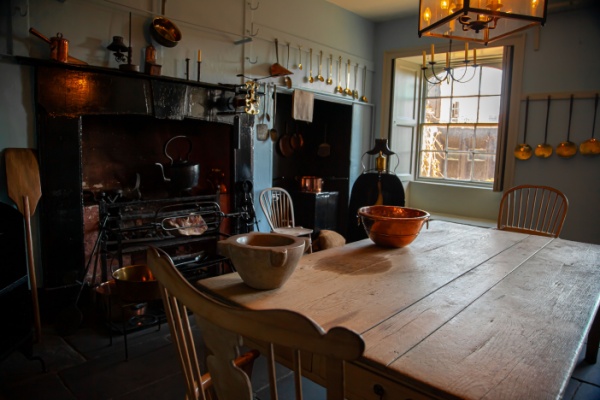
Season 4 of Bridgerton goes beyond the ranks of the nobility and delves into the lives of maids, footmen, and cooks. In fact, it is thanks to period dramas like Bridgerton and Downton Abbey that there is now a taste for traditional English kitchens in the air. The classic feel, pared-back palette, and rustic charm are designed to bring character and a sense of homeliness into your kitchen.
According to Architectural Digest, a return to warmer, more traditional interiors started making the rounds in 2024, and in 2025 that trend began expanding to kitchens as well. English country kitchens actually shot to the top of the list for DIY’ers, per the Houzz 2025 Home Design Trends, and those rich woods, historical paint colors, and natural countertop materials have continued showing up in renovation projects in 2026.
Design Experts Weigh In
Mitchell Parker, Houzz senior editor, says classic English country style can help to create a cozy and welcoming feel in the kitchen. “Think cabinets in rich woods, and historical paint colors like moody blues and deep greens,” he says. In addition, Parker notes that natural elements are being used. “This includes countertop materials like soapstone and butcher’s block, large range alcoves, wood ceiling beams, and collected looks that appear pieced together over time.”
“English kitchens seamlessly blend traditional elegance with modern convenience,” explains Gena Kirk, vice president of corporate studio at KB Home, one of the nation’s largest homebuilders. “Characterized by natural materials like oak, pine, or cherry wood cabinetry, marble countertops, and beautiful tile flooring, these kitchens evoke a sense of warmth and authenticity.”
“English style kitchens are hugely popular when trying to inject some character into your home, whether this be a small quaint or large showstopping space,” says Elizabeth Sherwin, creative director of Naked Kitchens. “Features such as exposed beams or flagstone flooring naturally inject that traditional feel. However, you can also re-create this style with the clever use of color, materials, and accessories within your design.”
When We’re Talking “English Kitchen,” What Do We Mean?
As Homes & Gardens reports, when most people think of a traditional English kitchen, they’re typically envisioning a Georgian kitchen. Built between 1714 and 1830, a Georgian kitchen has grand proportions, a sense of light and space, a restrained color palette, and a timelessness for function and practicality.
“Inspired by the honest English furniture making of the 18th Century, an English kitchen gains inspiration from Georgian vernacular buildings and the backroom spaces of National Trust houses,” explains Merlin Wright, design director of Plain English Kitchens. “After the war, English kitchens became more fitted and efficient, particularly in the 1950s when there were far fewer servants available, less wealth and households had to become more self-sufficient,” adds Merlin.
What Does an English Kitchen Look Like?
“At the heart of an English kitchen is its color and kitchen cabinetry style,” says Richard Davonport, managing director at Davonport Kitchens. “English kitchens are rooted in classical design and encompass many of the design features that we associate with period and premium kitchen design.’
Clean and orderly, but with a warm heart, an English kitchen provides easy access to your daily scullery needs. Think about Downton Abbey and Bridgerton season 4 and their upstairs-downstairs ‘back kitchens’ used for servants. “What appeals to so many about English kitchens is their timeless appeal,” Richard adds. “Done right, they don’t age or date and so provide longevity without having to compromise on style.”
“The color palette tends to feature warm neutrals to create a sense of spaciousness,” says Elizabeth Sherwin. “Incorporate rustic touches such as mixed materials, a Belfast sink, open shelving, and hanging copper pans from hooks for the classic English look,” she adds.
The 5 characteristics of an English Kitchen:
There are several characteristics that, if brought into your kitchen design, will help you to achieve that English-perfect finish. Let’s dive in.
An organic love of color
A quintessential Georgian-style English kitchen features painted wooden cabinets and walls in a neutral, organic color palette. While early Georgian color schemes favored bolder hues, later (and mostly popularly) they adopted lighter colors associated with nature such as sky blues, natural beige and stone, and soft greens.
“Kitchen color is so important,” adds Richard Davonport. “Many of our influences in English design center around the Georgian period and these kitchens were about practicality, rather than a design feature. And so colors were natural and neutral and we still bring this into our approach today. However, our love of color has added a twist to this, whether in the form of using a secondary shade on a kitchen island or in a complementary and understated tone,” says Richard.
A furniture-style approach to cabinetry
“Cabinetry-wise, it isn’t just about your run of wall or floor cabinets but about taking a bespoke approach to make your kitchen to make it feel like it is filled with furniture,” says Richard Davonport. “This may be in the form of a beautiful stand-alone cupboard or a full-height hutch that is painted in the same colors so that it fits into the space but feels bespoke and unique to your home,” he adds.
Rather than focussing on how many cabinets you can fit in the space, an English kitchen is all about open space with freestanding cabinets often used as display pieces like dresser units, coffee stations, and pantry storage. Plain English Kitchens’ Merlin Wright agrees. “Designing with proper cupboards rather than kitchen units helps to create the feeling of a ‘comfortable room’ not a fitted kitchen.”
Pantries and larder storage
Before fridges became commonplace in traditional English kitchens, the larder or pantry provided a space to keep perishable food items cool. Originally, it would have been an entire room made of stone, decked out in wooden shelving, and of course: well-ventilated.
“Main of the ‘wish-list’ items we get asked for when designing a new kitchen are routed in English kitchen design,” observes Richard Davonport. “Pantries have overtaken everything else we get asked for at the moment, whether a dedicated room or large pantry cupboards,” he adds.
“A pantry is very traditional, whether it’s a big cupboard or a room. It has come in and out of fashion as people lean towards fully fitted rooms with floor-to-ceiling and wall-to-wall cupboards, but for us, it is one of the quintessential parts of a classic English kitchen,” adds deVOL’s creative director Helen Parker.
The use of traditional and antique materials
In traditional kitchens rustic wood and stone were the building blocks. Incorporate these materials into your kitchen design to capture that lived-in, homely feel. “Colors and utilitarian aspects are the benchmarks of classic English kitchens,” says interior designer Shannon Eddings. “Think pot racks, apron front sinks, some color and a little bit of pattern, and an old stone floor.”
If you’re looking to incorporate some more contemporary finishes like marble and stone, Homes & Gardens suggests you look for a honed, low-luster polish finish and embrace a reclaimed patina with unlacquered metalwork (including your faucet) and antique or even preloved accessories. Patina is key to a well-loved, collected-over-time look.
Classic Appliances Are a Focal Point
The stove is at the heart of an English kitchen and serves as the focal point for the kitchen, for all the congregate around. In a very traditional, country English kitchen, you’ll find a cast-iron AGA range or Rangemaster occupying real estate in between classic cabinetry.
“An English kitchen is a place that you will actually cook, and is not designed around show, except for when it comes to the ranges…” says designer Anne-Marie Barton of AMB Design. “Not only must they work well, they must deliver a luxury vibe. A la Cornue, La Canche, or a Bertazzoni are often found in the homes I design when I want to convey my client’s joy of cooking,” she adds. Naked Kitchens’ Elizabeth Sherwin adds, “Prioritize a traditional range oven if you can, it’s the focal point to many an English kitchen and will evoke the warm and welcoming atmosphere synonymous with this style.”
Bottom Line
A traditional English kitchen is formed by the kitchens and pantries of the past. Think about implementing these expert-approved characteristics in your own home – like muted painted wooden cabinets, a farmhouse sink, and vintage-style appliances. Create a timeless, homely, and rustic appeal within the heart of your home.
—
Photo Credit: grandbrothers / Shutterstock.com