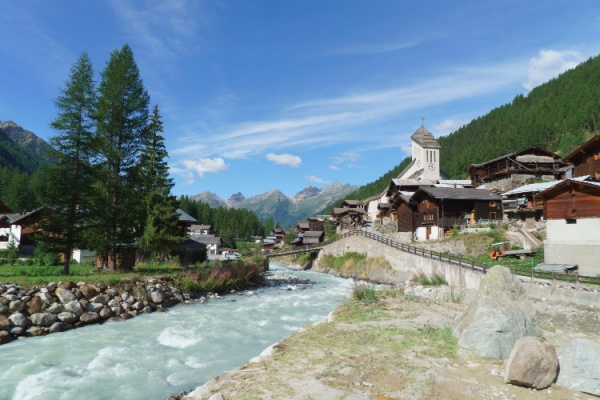
Last week, a village in the Swiss Alps was buried beneath ice, rock and mud after a massive piece of a nearby glacier collapsed.
As ABC News reports, on May 28, a landslide from the mountain side of Birch Glacier — located in the Lötschental valley in northern Switzerland — flattened homes in the Alpine town of Blatten after a large chunk of the glacier broke off, Bethan Davies, a professor of glaciology at Newcastle University in the U.K., told ABC News.
Cascading Disaster
The collapse occurred as a result of a “cascading disaster,” Davies said. There is also concern of flooding in the River Lonza due to the debris from the landslide.
The mountain side of the glacier had been unstable since the previous week, when millions of pounds of rock debris fell onto the glacier surface, Davies said. The load, along with warm temperatures earlier in the week, accelerated the glacier’s collapse, Swiss Radio and Television reported. “This is a marked acceleration,” Davies said. “Lots of cracks started to form, a sign of the tension in the ice.”
Emergency managers had been observing increased glacier melt at Birch Glacier, ordering hundreds of villagers to evacuate after debris from the mountain behind the glacier crumbled days before the catastrophic collapse.
Permafrost Thawing
The collapse likely occurred as a result of permafrost thawing underneath and along the sidewalls surrounding the glacier, Mathieu Morlighem, a glaciologist at Dartmouth College, told ABC News.
The permanently frozen soil is the “glue” that keeps the mountain rock stable, but as temperatures warm, the permafrost melts and destabilizes the mountain, Morlighem said, adding that a similar event happened in the Silvretta Alps in Switzerland in 2023.
The Birch Glacier was “much worse” due to the amount of ice and meltwater, which caused a deluge of ice, mud and rock to damage the picturesque village of Blatten. Video of the mudslide shows large mounds of debris racing down the mountain before burying the village of Batten. Satellite images above the town show where mud and debris cover areas where buildings once stood.
We Can Expect More Events Like This in the Future
The dangers of glacial degradation range from a sudden catastrophic collapse to formation of lakes that burst through their natural dams and cause havoc, which has happened in the Himalayas and Andes mountain ranges, Sridhar Anandakrishnan, a glaciologist at Pennsylvania State University, told ABC News.
“I think we can expect more events like this in the future,” Morlighem said.
—
Photo Credit: Flavia Cochet / Shutterstock.com