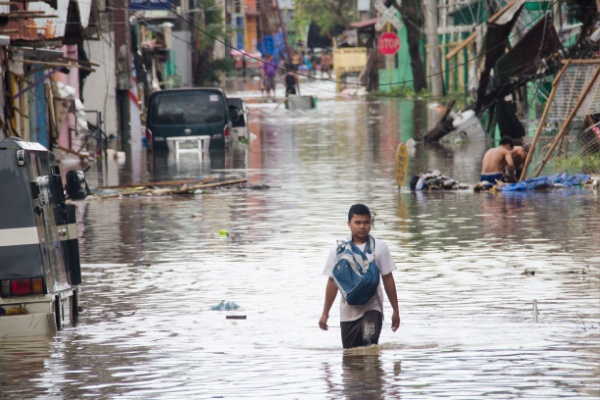
Typhoon Fung-wong ravaged the northern Philippines over the weekend, killing at least two people and cutting off some towns as residents emerged on Monday morning after a sleepless night to start assessing the damage.
As Reuters reports, more than one million people were evacuated before Fung-wong made landfall as a super typhoon in the eastern town of Dinalungan in Aurora province on Sunday night. It pounded parts of the country’s main island of Luzon with fierce winds, heavy rain and storm swells through the night.
The typhoon, locally named “Uwan”, damaged houses in the northern city of Santiago in Isabela province. Tree branches and electric posts were also felled by the typhoon. “We could not sleep last night because of the winds hitting our metal sheets and the tree branches falling,” said Romeo Mariano, who was sheltering with his grandmother in their home. “Almost all of the tree branches nearby fell, and when we got out to check our home, we saw the damage,” he added.
At least two people were killed by the typhoon, according to an early report from the Civil Defence office, with two others injured. Aurora vice-governor Patrick Alexis Angara said at least three towns were inaccessible due to landslides and broken roads. “Assessment and clearing operations are underway,” Angara told broadcaster DZMM.
The state weather agency said the typhoon was now moving over the South China Sea, and is forecast to shift northeast towards Taiwan. It warned that a large portion of the country still faced heavy rains and severe winds, along with storm swells in coastal areas.
Fung-wong was the 21st storm to hit the Philippines this year and came immediately after Typhoon Kalmaegi, which last week killed 224 in the country and another five in Vietnam.
Why are Typhoons Getting Stronger?
Essentially, the overheating of our planet is warming the world’s oceans and supercharging tropical cyclones. World Weather Attribution scientists reported in 2024 that a warming planet intensified the late 2024 typhoon season. Half of the six major storms striking the Philippines between late October and mid-November were major typhoons.
Soaring ocean temperatures due to climate change are the primary reason for the increased intensity of tropical cyclones – typhoons, hurricanes and cyclones fall into this collective category – leading to more powerful storms with stronger winds and heavier rainfall. While the overall frequency of storms may not increase, the likelihood of extreme events is rising, with storms becoming more intense and more likely to make landfall with a higher intensity.
Additionally, rising sea levels worsen storm surge impacts, and human factors like population density and coastal development in hazard-prone areas contribute to the number of deaths from these events.
How Climate Change Fuels Stronger Typhoons
- Warmer oceans: Warmer ocean surface temperatures act as “fuel” for tropical cyclones, increasing their intensity by providing more energy. This leads to stronger winds and heavier rainfall.
- Increased moisture: Warmer air can hold more moisture, which translates to more intense downpours and a greater risk of flooding during a storm.
- Higher intensity storms: Studies indicate that the number of Category 4 and 5 typhoons has increased and that storms are more likely to be at a higher intensity when they make landfall.
- Higher latitude storms: Typhoons are reaching their peak intensity at higher latitudes, which means more powerful storms are hitting new areas.
Other Factors that Increase a Typhoon’s Deadliness
- Rising sea levels: Higher sea levels exacerbate storm surge, which can be particularly devastating to coastal communities and increase the severity of flooding.
- Coastal population growth: More people living in coastal areas, combined with infrastructure and housing that may not be built to withstand powerful storms, increases the potential for casualties and damage.
- Urbanization: The growth of cities in storm-prone areas also contributes to the deadliness of these events.
—
Photo Credit: at.rma / Shutterstock.com