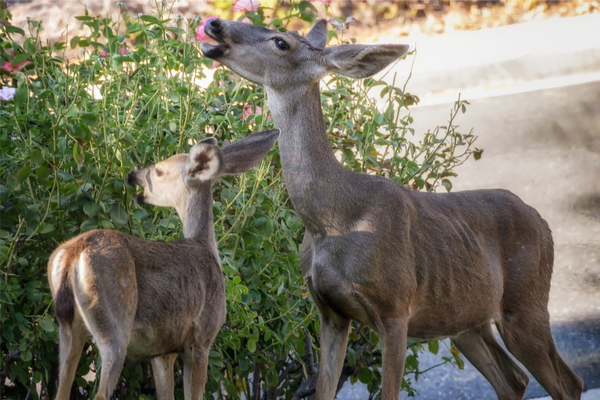
A deer darting into the road can leave drivers seconds to react, and the fall season brings a dangerous overlap: more active deer and less daylight during busy commuting hours.
As AccuWeather reports, across much of the country, fall is deer mating season, also called the rut. Deer (and in case you live in such an area, also Elk, Bison, Moose, Sheep, Goats, and the like) become more unpredictable, increasing the chance of one suddenly crossing a vehicle’s path, AAA warns.
Robert Sinclair Jr., senior manager of public affairs for AAA Northeast, told AccuWeather that the danger builds in late October and remains especially high in November. “They start engaging in bad behavior, unpredictable behavior, especially running out into a road,” Sinclair said.
The Rut Coincides with Shorter Days
Mating/rutting season brings increased deer activity just as shorter days make the animals harder for drivers to see. Deer are particularly active around dawn and dusk, putting them near roads when many people are traveling to and from work.
Low light and sun glare can make spotting an animal along the shoulder more difficult. After dark, the danger can be especially pronounced on rural roads without streetlights. “Nighttime is going to be the most dangerous time because it makes them harder to see,” Sinclair said.
The risk extends beyond wooded back roads. Development has encroached on deer habitat, creating opportunities for encounters in more populated areas. “You can run into deer anywhere. Urban, rural, it doesn’t matter,” Sinclair said.
Compounding the problem, Sinclair explains that deer can also freeze when confronted by headlights (“like a deer in headlights”), leaving an animal standing in a vehicle’s path.
Crashes Involving Animals Are More Common Than You Think
State Farm estimates more than 1.6 million animal-vehicle collision insurance claims nationwide between July 1, 2025, and June 30, 2026. The insurer alone paid $1.9 billion in animal-vehicle collision claims during that period. Deer were the most frequently struck animals.
State Farm puts the national likelihood of an animal collision at 1 in 145, compared with 1 in 139 the previous year. West Virginia had the highest likelihood, at 1 in 46, followed by Montana, Wisconsin, Pennsylvania and Michigan. Pennsylvania had the most estimated claims across the insurance industry, at approximately 141,000.
Separately, National Highway Traffic Safety Administration figures cited by AAA Northeast show more than 1.5 million crashes involving live animals from 2020 through 2024, including 948 fatal crashes. More than 40% occurred between September and December. Those figures cover animals other than deer and measure crashes rather than insurance claims.
AAA’s analysis of New Jersey crash data found that November accounted for 20% of deer crashes from 2020 through 2025, the largest share of any month.
What Should You Do if a Deer Runs Into the Road?
“Don’t swerve. That is the most important piece of advice that drivers have to understand,” Sinclair said. An abrupt turn can send a vehicle off the road, into a tree or into another vehicle. State Farm recommends braking firmly and staying in the lane when possible.
The New Jersey data illustrate the danger: Injuries were reported in 4.5% of crashes when vehicles struck deer directly, compared with more than 27% when drivers swerved and struck another vehicle or an object.
Drivers should scan road shoulders, obey speed limits, and slow down when deer are nearby. Lower speeds provide more time to react and can reduce the severity of a collision, Sinclair said.
And one deer crossing does not mean the road is clear. Keep your eyes peeled for traveling companions, fawns following their mamas, or a randy buck chasing a doe. “If you see one deer, there are generally others. They usually travel in groups,” Sinclair said.
—
Photo Credit: Lux Blue / Shutterstock.com
