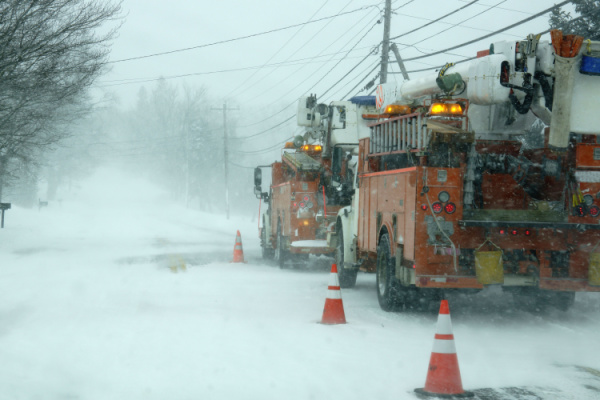
A powerful coastal storm, dubbed a “nor’easter,” tracked up the East Coast over the weekend and into the start of the new week, bringing pounding surf, heavy rain and gusty winds that flooded streets, eroded beaches and snarled travel from the Carolinas to New England. The storm’s strongest impacts were felt along the shoreline, where storm surge sent seawater spilling into communities and waves chewed away at dunes.
“This is pretty intense, it’s not like usual,” long-time Virginia Beach residents Lana and Clarence Cooke told AccuWeather reported on Sunday. “The most unusual thing right now is the water levels. Roadways are pretty bad. Coastal flooding stretched from North Carolina to New York, where storm surge reached 3 to 4 feet in some areas. Tropical-storm-force wind gusts were clocked along the mid-Atlantic coast, including a gust of 56 mph near Atlantic City, New Jersey, and a 60-mph gust at a buoy near Long Island.
New Jersey declared a state of emergency and Delaware activated its National Guard as the storm gained strength, according to The Associated Press.
What’s a Nor’easter?
According to the National Weather Service (NWS), a nor’easter is a large-scale extratropical cyclone storm along the East Coast of North America, so called because the winds over the coastal area are typically from the northeast. Typically, such storms originate as a low-pressure area that forms within 100 miles (160 km) of the shore between North Carolina and Massachusetts.
The precipitation pattern is similar to that of other extratropical storms, although nor’easters are usually accompanied by heavy rain or snow, and can cause severe coastal flooding, coastal erosion, hurricane-force winds, or even blizzard conditions.
These storms may occur at any time of year but are most frequent and most violent between September and April, because of the difference in temperature between the cold polar air mass coming down from central Canada and the warm ocean waters off the upper East Coast. The susceptible regions are generally impacted by nor’easters a few times each winter.
Why do Nor’easters Happen in this Region?
NWS states that the U.S. East Coast provides an ideal breeding ground for Nor’easters. During winter, the polar jet stream transports cold Arctic air southward across the plains of Canada and the United States, then eastward toward the Atlantic Ocean where warm air from the Gulf of America and the Atlantic tries to move northward.
The warm waters of the Gulf Stream help keep the coastal waters relatively mild during the winter, which in turn helps warm the cold winter air over the water. This difference in temperature between the warm air over the water and cold Arctic air over the land is the fuel that feeds Nor’easters.
Watches vs. Warnings
Weather forecasters at NWS local forecast offices around the country and at the National Centers for Environmental Prediction near Washington, D.C., monitor conditions conducive for Nor’easters, especially during the fall and winter. When they see conditions are favorable in the upcoming days, forecasters may issue winter storm, blizzard, high wind and coastal flood watches to alert the public that some of the worst effects of Nor’easters might be possible.
If conditions are imminent, those watches are changed to warnings.
—
Photo Credit: Picketfence / Shutterstock.com