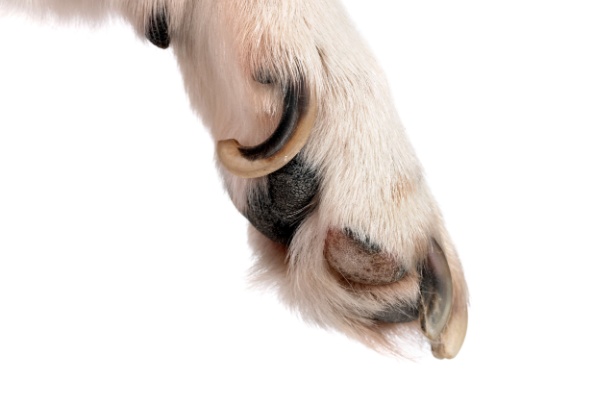
What you know about your pup’s claws: They click-clack on the hardwood, dig in the dirt, and sometimes leave marks on the couch. You’ve probably also notices that dogs have an “extra” toenail located high up above their paws called dewclaws. But what the heck are they? And why do dogs have them?
Below, Daily Paws explains all, including how to care for these special digits.
What Are Dewclaws?
When you take a look at your dog’s front paws, the dewclaw is the toe and nail that sits a little higher up the leg than the rest of your dog’s toes. It’s similar to the position of the human thumb on a hand. Some dogs also have dewclaws on their rear feet, and certain breeds like the Great Pyrenees have double dewclaws, meaning you’ll see two digits (and two nails) in the dewclaw spot.
Why Do Dogs Have Dewclaws?
“The ancestors of modern canines were actually climbers like cats. So, their dewclaws helped them climb trees and cliffs,” says Natalie Marks, DVM, CVJ, and co-founder of VetScoop, a resource for trusted veterinary advice. “But as the species evolved, the dewclaws moved higher up the paw, coming off the ground. That gave dogs more speed to evade predators but made the dewclaw functionless for the vast majority of dogs.”
A few very active, working dog breeds do still use dewclaws for gripping and stabilization. For example, they can be useful for hunting, military, and search-and-rescue dogs. When they’re running over uneven terrain, the dewclaws may touch the ground and help them move more quickly. Also, dog breeds from frigid climates (think: Alaska and Antarctica) use their dewclaws to grip ice if they’ve fallen into the water and need to climb out.
Which Dog Breeds Have Dewclaws?
All dog breeds are born with front dewclaws. Only a handful of breeds, such as the Icelandic sheepdog and Saint Bernard, have them on their back paws as well. If you don’t see any dewclaws on your pooch, it’s probably because the breeder had them removed shortly after birth, says Marks.
Is Dog Dewclaw Removal Necessary?
“Traditionally, some dog breeders have opted to have their puppies’ declaws removed a few days after birth. This was intended to prevent future injuries to the dewclaws and to uphold breed standards,” says Jenna Stregowski, RVT, Daily Paws‘ Pet Health and Behavior Editor.
In puppies, dewclaw removal is simple and quick due to undeveloped bones, though it’s painful and often unnecessary. Adult removal, requiring surgery under anesthesia, involves detaching bone, nerve, and muscle, resulting in longer recovery with exercise restrictions and an e-collar.
Adult dog dewclaw removal is rare, Marks adds. “We do it when it’s the only option we have left—if there’s a permanent injury, tumor, fracture, or infection that won’t heal.”
Overall, removal is not incredibly necessary, as dewclaw injuries are not extremely common in pet dogs. Injuries occur more often in working dogs who get their dewclaws caught while running through rough terrain, she explains. “There is typically no medical need for puppies to have their dewclaws removed. Dewclaws serve a purpose: they help stabilize the carpal (wrist) joint when a dog puts pressure on the front paws and can provide extra traction on some surfaces.”
Common Dewclaw Injuries
Dogs are more likely to injure a dewclaw than another toe. That’s because dewclaws often become overgrown. And sometimes, back dewclaws aren’t firmly attached and dangle loosely. That makes dewclaws prone to getting caught on things and breaking as your pooch pulls away.
Broken Dewclaws
Broken dewclaws bleed if the quick—the tissue in the center of the nail that includes a blood vessel—is exposed. This can also happen if you trim too far down the nail. To stop the bleeding, Marks recommends using cornstarch. It’s a crude hemostatic agent, which means it’ll temporarily stop bleeding, so it’s a good idea to keep some on hand at home and in the car, especially if you regularly take your dog on hikes. If your dog’s nail is fractured or the bleeding continues, see a veterinarian.
Infection
Like the other toes on your dog’s paw, dewclaws may also develop ingrown nails and nail bed infections. Marks says another cause of dewclaw infection is when dogs excessively lick their paws due to allergies or anxiety. Signs of infection include a change in color, swelling, and odor. Treatment for an infected dewclaw requires antibiotics, bandaging, and usually an e-collar to keep your pup from licking the infected dewclaw.
Dewclaw Care
To prevent injuries, it’s important to treat dewclaws the same as your dog’s other nails. In fact, says Marks, you should monitor and trim dewclaws more often. “The rest of the nails get worn down by going for walks on cement and playing at the park. But the dewclaws never touch the ground, so they quickly become overgrown.”
With proper maintenance, though, dewclaws aren’t usually a problem.
—
Photo Credit: cynoclub / Shutterstock.com
