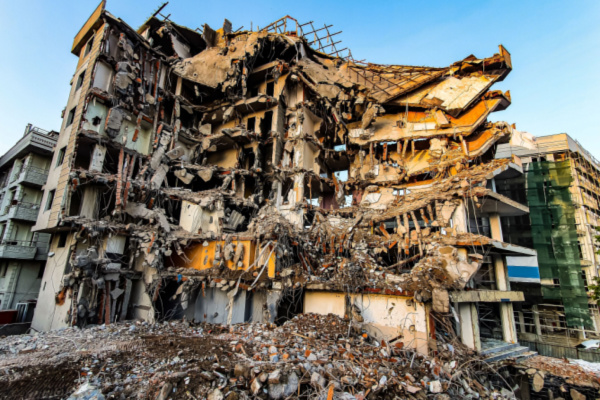
With the window for finding survivors shrinking fast, Venezuelans this week continue to comb through more ruins of buildings toppled by last week’s powerful back-to-back earthquakes, and attention turned to the country’s humanitarian crisis that could persist for years.
“When we talk about the effects of earthquakes, we say, you know, it’s not the shaking that kills people, it’s buildings that kill people, and it’s really the collapse of those buildings that can lead to the catastrophic loss of life,” USGS Research Geophysicist William Yeck said.
Aftershocks Continue as Death Toll Rises
As The Associated Press (AP News) reports, shell shocked residents of the region continue to be plagued by significant aftershocks. After what the government said were more than 600 aftershocks since Wednesday’s quakes, a moderate temblor on Monday struck 27 kilometers (17 miles) north of Caraballeda on Venezuela’s Caribbean coast and measured 4.6 magnitude, according to the United States Geological Survey. There were no reports of damage, but the shock sent residents in the capital of Caracas screaming into the streets.
The death toll is now at more than 1,700 people with thousands badly injured and tens of thousands still listed as “missing,” according to the government, which has long retained tight control over news media. So what made these earthquakes so deadly and damaging?
A Seismic Doublet
On June 24, Venezuela experienced a seismic doublet that saw earthquakes of magnitude 7.2 and 7.5 occur just 39 seconds apart. The first tremor occurred with its epicenter in Yaracuy. Just a few seconds later, an even more intense earthquake shook the same region again.
While not as common as a typical earthquake where a main shock is followed by much smaller aftershocks, doublets can happen anywhere in the world, Christine Goulet, director of the USGS earthquake science center in California, told The Associated Press (AP News).
Doublets indicate a complex fault structure, like the one in Venezuela. Known as the Bocono fault, it runs along the backbone of the Venezuelan Andes for about 300 miles (500 kilometers). A previous doublet — of magnitudes 6.2 and 6.3 — struck an area west of Caracas in September 2025, killing at least one person and injuring more than 100 others. Most of the damage was reported in the states of Zulia and Lara.
What Factors Made the Double Earthquakes so Destructive?
Most earthquakes occur along plate boundaries, which is where tectonic plates meet. A rupture where the Caribbean and South American tectonic plates meet unleashed the two quakes.
The doublet occurred where the Caribbean plate, located north of Venezuela, moves eastward relative to the South American plate at an average rate of 0.79 inches (2 centimeters) a year. “It’s a large displacement,” Goulet noted. “It’s on the order of the San Andreas fault.”
The movement was a shallow strike-slip faulting, which occurs when two blocks of rock slide past one another horizontally. That kind of movement is not more dangerous by default, Goulet said. “A more vertical motion can be more damaging,” she said, adding that other factors, including the length of the rupture, determine the amount of damage.
The boundary between the Caribbean and South American plates is less active than others, but as Wired reports, when they do cross paths, they are incredibly violent and destructive.
Alan Damián Sánchez Pulido, a civil engineer from Mexico’s Ibero-American University and a specialist in structural damage assessment, explains that the plates’ positions and movements are why earthquakes aren’t as common as they are in other regions—and why they’re so powerful when they do occur. “In Venezuela, the interaction between the Caribbean and South American plates involves parallel movement; that is what may have caused two earthquakes of considerable magnitude to occur in such quick succession,” he notes.
“Many structures sustained some kind of damage from the first earthquake. That doesn’t mean the damage was extensive, but any damage alters the original behavior for which they were designed. When another earthquake of similar magnitude strikes immediately afterward, there is no longer any opportunity to reinforce, inspect, or repair the structure. As a result, it no longer performs as intended,” he says.
How common are earthquakes in Venezuela?
In the past century, only seven earthquakes of magnitude 6 and higher have hit in the immediate vicinity of the most recent ones, according to USGS. These include the 2025 doublet that struck west-northwest of the latest quakes.
Individual earthquakes of magnitude 6 or higher struck in 2009, 1989 and 1975. The most devastating one hit in July 1967. It was a 6.6 magnitude quake that killed hundreds of people. Overall, five earthquakes of magnitude 7 and higher have occurred in northern Venezuela or near the coast since 1900, according to USGS.
The most catastrophic earthquake occurred in March 1812 along the Bocono fault system, killing an estimated 30,000 people.
Rescue Efforts and Humanitarian Aid Continues
Relief organizations say the first 72 hours after a natural disaster is the most crucial time period for rescues, though survival can be extended if people have access to food and water. Five days after the twin quakes, questions loomed about whether the cash-strapped government will be able to coordinate the effort needed to care for thousands of people who have been left homeless. Citizens have even begun stepping up with their own efforts, from delivering aid to setting up digital platforms to find missing people.
Other countries are also providing support. The US announced that it has committed $150 million to address the emergency: $50 million will be distributed through organizations such as World Vision and Samaritan’s Purse, and another $100 million will be contributed to a United Nations fund for Venezuela. For its part, Mexico sent 250 personnel from the Ministry of National Defense, five specialized search dogs, four aircraft, and a search-and-rescue drone, while Spain deployed teams from the Military Emergency Unit and aid workers to strengthen search, rescue, and humanitarian relief efforts.
How to Prevent this Tragedy from Happening Again
Scientists cannot predict earthquakes, but aftershocks are common after big ones. The USGS said there’s a 99% chance of at least one magnitude 4 aftershock hitting Venezuela within the next week, and a 24% chance of a magnitude 6 one occurring.
Unlike other countries, Venezuela does not have an early earthquake warning system, which relies on sensors to detect the first waves of an earthquake. “It’s very distressing that there was basically no time to evacuate,” she said. “That’s extremely unfortunate.”
For Sánchez Pulido, the engineer, the most important lesson for planning for the future is building a culture of prevention. “Often, we only worry about an earthquake after it has already happened, and if a long time passes without a major one, we stop conducting drills, stop following Civil Protection guidelines, and forget that it can happen at any moment,” he warns. Because they are impossible to predict far ahead of time, Sánchez Pulido says, “The important thing is to know how to react.”
—
Photo Credit: twintyre / Shutterstock.com
