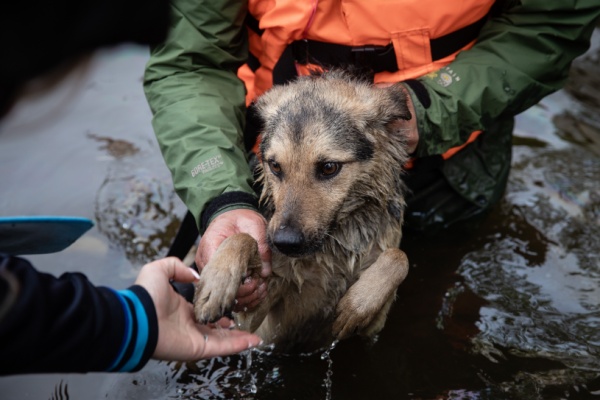
As daylight hit Kerrville, Texas, and the surrounding areas, the full impact of the devastation from the July 4 flood event was revealed. There was a loss of life, and many people were unaccounted for. While these were the headlines that dominated the news for days, as A-Z Animals reports, there were also hundreds of domestic pets and wildlife that needed help in the wake of the flooding.
Fortunately, as soon as they were allowed into affected areas, amazing animal rescue work began after the Texas floods and continues today. These organizations have been working around the clock to save, provide medical care, reunite, and offer foster homes to animals in need, resulting in the saving of hundreds, if not thousands, of lives.
Record-Breaking Animal Intakes by Rescue Groups
With so many people taken by surprise by how quickly floodwaters rose in Kerrville and surrounding areas, many were able to get out of their homes with only the clothes on their backs. This meant, in some situations, animals were left behind. Rescue groups such as Operation Kindness, out of Carrollton, Texas, broke previous intake records for a 24-hour period, pointing to just how many animals were in need in the days after the flooding occurred.
“In a single 24-hour period, Operation Kindness transferred 122 pets into their care, the largest one-day intake in the organization’s history,” read a statement. “On Wednesday, July 9, Operation Kindness traveled to Williamson County, transferring 40 animals to North Texas for care. The Williamson County Regional Animal Shelter has been a transfer zone for South Texas animals, receiving up to 230 animals in one day following the devastating storms. Operation Kindness kennel teams have deployed to Williamson County to assist in animal care and kennel cleaning.”
Hundreds of Animals Have Been Saved
In addition to Operation Kindness, organizations like Austin Pets Alive! and Utah-based Best Friends Animal Sanctuary have been working with Wings of Rescue to airlift animals out of affected areas to animal rescue facilities in other areas. For example, there were more than 1,000 adoptable dogs and cats whom Best Friends assisted in moving out of Texas shelters in just one week. The effort is freeing up space in those shelters after devastating floods hit central Texas over the Fourth of July weekend. Now, flood-displaced pets can find safety in those shelters close to home, where they have the best chance of being reunited with their families.
It also, of course, benefits the pets who were already in Texas shelters, as people and organizations from across the country step up to help. Nearly 70 of those pets have already arrived at Best Friends Animal Sanctuary.
According to Angela Nazworth, Senior Director of Philanthropy and Communications for Austin Pets Alive!, their organization alone has taken in hundreds of animals since July 4th. “Austin Pets Alive! Has taken in over 500 pets dogs and cats already in shelters before the floods out of the area to provide space for pets displaced by the floods, as well as help reduce overcrowded conditions in shelters directly impacted by the floods, allowing animals to be closer to the areas they were found and increasing the likelihood of reuniting with their families,” Nazworth explains to A-Z Animals. “APA! is only taking dogs and cats who were in shelters prior to the storms or who have since been surrendered to shelters. We will not take in any pets who have families searching for them.”
Rescues are Also Helping Communities and Survivors
In addition to housing shelter animals, Austin Pets Alive! is helping smaller communities impacted by the flooding as well.
“The impact has now been noticed beyond Kerr County, with hundreds of pets in need of help in more rural areas, such as San Saba,” Nazworth says. “The nonprofit is now deploying supplies, staff, and volunteers to additional counties in Texas.”
This effort has resulted in Austin Pets Alive! deploying over 1,000 volunteers who have assisted in search and rescue efforts, supply runs, and reunification efforts. Additionally, 3,500 community members have contributed to the cause, including fostering animals, transporting them to facilities outside the areas impacted by the flooding in Texas, and delivering much-needed supplies to organizations in need.
Outside of providing transportation, Meredith Jones, Chief Community Initiatives Officer of Operation Kindness, says in the statement that Operation Kindness is also working to help survivors of the flooding. “We’re providing a very comprehensive level of support,” Jones explains in the statement. “Not only are we bringing animals into our care with quick turnaround, but we’re also sending our pantry team to provide resources for disaster survivors. We’re also committed to providing relief, resources, and services after the initial outpouring of help has dissipated.”
Domestic Animals Are Not the Only Ones Impacted By Floods
Cats and dogs have been saved in the hundreds thanks to the efforts of animal rescue organizations both in and outside of Texas. However, many overlook the fact that wild animals were also affected by the flooding and require assistance. Thanks to organizations like Austin Wildlife Rescue, located in Austin, Texas, wild animals are being rehabilitated so they can return to their homes as soon as they are healthy and it is deemed safe to do so.
According to Jules Moran, the Executive Director of Austin Wildlife Rescue, the organization takes in approximately 10,000 “orphaned or injured wild animals from Texas” every year. However, the number of animals taken in due to the flooding has been massive, with some of the youngest needing round-the-clock care.
“Since the terrible 4th of July floods, Austin Wildlife Rescue has taken in 214 wild animals in need, many impacted by severe weather events,” Moran explains to A-Z Animals. “We are seeing species across the board: young birds and tiny baby squirrels have been rained out of a lot of their nests and have fallen to the ground. A large number of baby skunks and baby cottontail rabbits have been washed out of their nests as well. These ground-dwelling nesters have especially been impacted. Skunks make their dens underground, and the cottontails are on the ground. So many waterlogged babies were brought into our facility of those species.”
Moran goes on to say, “We appreciate the compassion of our community to take the time to bring this wildlife in need to us. The baby animals are so vulnerable. They are already unable to thermoregulate due to their young age, but their body temp drops significantly once they get soaked in water, so timing is critical to get these babies in and get them warmed and dried.”
There was one animal that stuck out to Moran and others at Austin Wildlife Rescue after it was brought in for help. It was a baby fox who suffered two broken legs after being washed into a storm drain. “A baby fox was brought in with two fractured hind legs after being washed out of a storm drain,” Moran tells A-Z Animals. “After he was stabilized for a couple of days, our veterinarian performed orthopedic surgery to repair his left hind femur. His right hind tibia will be splinted.”
It may be some time before the fox and other rescued wild animals can return to the wild. But with the goal being to return the animals to their natural environments, the wild animals are receiving top-notch care to ensure this happens.
What You Can Do to Help
Just like not all the rescue organizations helping with displaced animals are from Texas, there are those outside of the state that want to know what they can do to help animals as they recover from the devastating floods, desperately hoping to be reunited with their loved ones. For those who want to provide assistance but are out of state, there is plenty that can be done.
One of the easiest ways to help is to check on a rescue organization’s website to see if there are any donations needed. Most have an Amazon wish list, making it very easy to donate. Just click one or more items on the list; the selected items will be added to your cart, and once purchased, they will be automatically shipped to the rescue to help animals in need.
Additionally, many animals are not only being flown out of the area but out of state as well. This means there are shelters across the United States that are receiving dogs and cats from Texas who either need fostering or a forever home. Stepping up to help with either takes a huge load off of shelters that are not only overrun with their animals, but now new ones from Kerr County and beyond.
Those who are local, have escaped any flood damage, and want to help displaced animals are in a position to have a more immediate impact on their communities. Ways to help the rescue organizations and the animals include:
- Organizing supply drives based on what local shelters need and delivering goods to shelters
- Help transport animals from crowded shelters to those that have space available
- Foster or adopt an animal
- Volunteer at local shelters to help walk dogs, clean cages, or anything else the rescue needs
For those who were not directly impacted by the flooding, life has gone on, and reports of the devastation in Texas may not be at the forefront of people’s minds. But those who live in Kerr County and the surrounding areas are still living in a nightmare. Rescue organizations are spread thin, but continue to do all they can to help animals in need. Organizations like Austin Pets Alive!, Operation Kindness, Best Friends Animal Sanctuary, Austin Wildlife Rescue, and others do not save animals to make headlines. They do so because animals, like people, are traumatized during events such as the July 4th devastation and need help.
Therefore, if able, please provide assistance to these organizations or to one of the many others that have been working tirelessly to save, reunite, and care for displaced animals. These organizations may not be accustomed to being in the spotlight for saving animals, but if ever there was a time to shine that light, it is now, as they need the public’s help more than ever.
—
Photo Credit: Drop of Light / Shutterstock.com