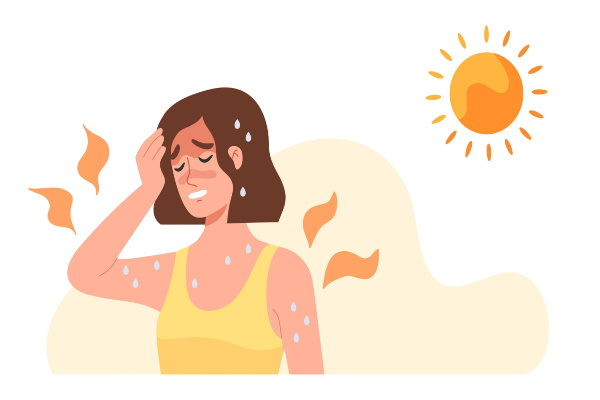
“It’s not the heat, it’s the humidity”. That’s a partly valid phrase you may have heard in the summer, but it’s actually both.
What is a Heat Index?
According to the National Weather Service (NWS), the heat index, also known as the “apparent temperature,” is what the temperature feels like to the human body when relative humidity is combined with the air temperature. This has important considerations for the human body’s comfort. When the body gets too hot, it begins to perspire or sweat to cool itself off. If the perspiration is not able to evaporate, the body cannot regulate its temperature.
Weather services use the heat index to issue heat alerts and warnings, helping people stay informed and safe during extreme heat events.
Why It’s Important to Pay Attention to the Heat Index
Evaporation is a cooling process. When perspiration is evaporated off the body, it effectively reduces the body’s temperature. When the atmospheric moisture content (i.e. relative humidity) is high, the rate of evaporation from the body decreases. In other words, the human body feels warmer in humid conditions.
The opposite is true when the relative humidity decreases because the rate of perspiration increases. The body actually feels cooler in arid conditions. There is direct relationship between the air temperature and relative humidity and the heat index, meaning as the air temperature and relative humidity increase (decrease), the heat index increases (decreases).
This is why employers, especially those with outdoor workers, use the heat index to adjust work schedules and implement protective measures to prevent heat stress and illness.
Adverse Health Risks due to a High Heat Index
High heat index values are associated with increased risk of heat cramps, heat exhaustion, and even heatstroke. Understanding the heat index allows individuals to take necessary precautions like staying hydrated, taking breaks, and avoiding strenuous activity during peak heat.
How to Determine the Heat Index
In order to determine the heat index, you need to know the air temperature and the relative humidity. For example, if the air temperature is 100°F and the relative humidity is 55%, the heat index will be 124°F – and that’s in the shade. You can expect to add up to another 15°F if you’re in direct sunlight.
When the relative humidity is low, the apparent temperature can actually be lower than the air temperature. For example, if the air temperature is 100°F and the relative humidity is 15%, the heat index is 96°F (use this calculator). In the Panhandles, we commonly see hot temperatures during the summer, but the low relative humidity values make it somewhat unusual to see dangerous heat index values (i.e. 103°F or greater).
A full heat index chart for a larger range of temperatures and relative humidity values can be found at this link.
—
Photo Credit: Madua / Shutterstock.com