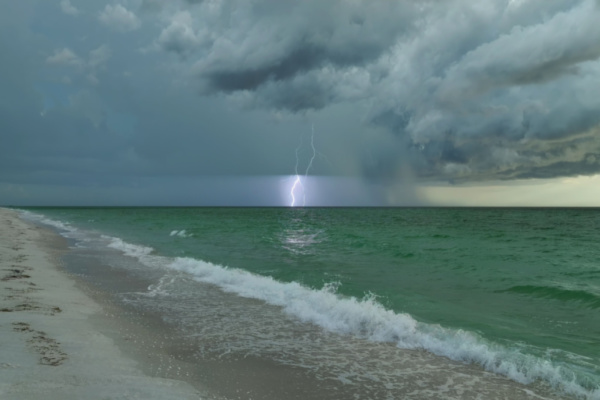
King tides have inundated parts of both U.S. coasts this week, breaking records with rising sea levels, flooding streets and sending seawater into homes and businesses in beach communities in California, Florida and the Carolinas. This week’s King tides, like their name, have definitely been making, well, waves. Residents didn’t need a beach to see the ocean. The ocean came to them.
These tides began with the full “Hunter’s” moon earlier this week, and although King tides usually ebb and flow with the full moon, these have been unusual in how long they’ve been predicted to continue. Forecasters are saying they have the potential to cause flooding in some areas well into the weekend.
Breaking Records
Record high tides were set this week in Santa Barbara, San Pedro, San Diego and nearby La Jolla, according to the weather service. Officials shut down traffic on a flooded portion of the four-lane Pacific Coast Highway (PCH), which winds from Orange County up through California. In the northern part of the state, minor flooding was expected through Saturday in low-lying areas along shorelines and tidal waterways during peak high tides, the weather service said. Coastal flooding generally occurred within 1 1/2 hours before and after high tides, which are peaking 1.9 feet (about a half-meter) above normal in Northern California.
On the other side of the nation, most of Florida’s Atlantic coast was under flood warnings through early Friday. Street flooding was also reported in South Carolina coastal cities, including Charleston and Myrtle Beach, and rip currents were possible as far north as North Carolina’s Outer Banks. Virginia Key, a barrier island in Miami, saw its highest king tide and the third-highest water level since records were first kept going back three decades.
What is a King Tide? What Causes Them?
According to the National Oceanic and Atmospheric Administration (NOAA), a King Tide is a non-scientific term people often use to describe exceptionally high tides. Tides are long-period waves that roll around the planet as the ocean is “pulled” back and forth by the gravitational pull of the moon and the sun as these bodies interact with the Earth in their monthly and yearly orbits.
These “King,” or higher than normal tides typically occur during a new or full moon and when the Moon is at its perigee, or during specific seasons around the country. They can occur several times a year and can last several days, although their timing and intensity vary by location. Low-lying neighborhoods, waterfront properties, beaches and coastal roads are particularly vulnerable to their effects.
Some coastal areas experience their highest tides during the fall or winter, while others see them at different times of the year. King Tides affect coastlines around the world, including communities along the Atlantic, Pacific and Gulf coasts of the U.S.
As we’ve seen, these naturally occurring tides can inundate streets, flood waterfront neighborhoods and push seawater into areas that typically remain dry, particularly in regions with low elevations and poor drainage.
Additional Factors Can Worsen the Problem
Although King Tides do not always cause flooding, their impacts can worsen when they coincide with strong onshore winds, heavy rainfall or storm surge from coastal storms. These factors can push water farther inland and increase flood levels.
This week’s king tides have been exacerbated by additional factors, forecasters said Wednesday. In Florida, strong high pressure to the north and low pressure over the Caribbean were causing increased swells, Chris Fisher, a National Weather Service meteorologist in Miami, said.
Along the California coast, the ongoing super El Niño has warmed the ocean, leading to an increased volume of seawater. Another factor was the occurrence of Kelvin waves, a series of pulses of warm water that lift the sea level, said Roger Gass, a meteorologist with the weather service’s Bay Area forecast office in Monterey.
Rising Sea Levels and Climate Change
Rising sea levels are increasing the risk of high-tide flooding in many coastal communities. Because King Tides occur on top of the average sea level, even a modest rise in water levels can allow tides to reach areas that were previously dry.
Experts say that King Tides can provide a glimpse of how rising sea levels may affect vulnerable coastal areas in the future.
Be Aware and Stay Safe
Residents in coastal areas should check local tide forecasts, monitor weather alerts and move vehicles and valuables away from flood-prone areas when necessary. And people should never drive through floodwaters or approach dangerous surf during high water.
—
Photo Credit: Bilanol / Shutterstock.com
