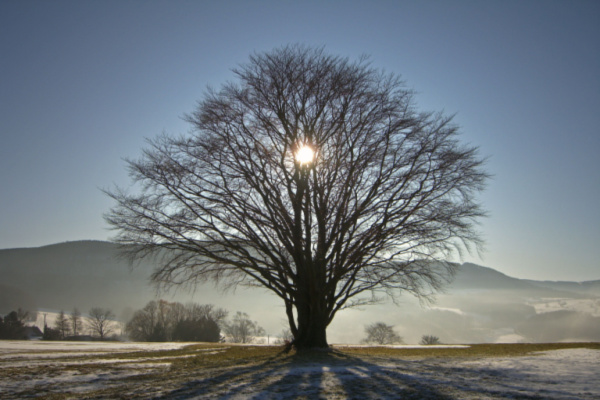
The Northern Hemisphere’s shortest day and longest night of the year – Winter Solstice – occurs on Sunday, Dec. 21. As well as marking the beginning of astronomical winter, it sees the sun rise late, remain low throughout the day and set early. It also sees the sun’s rising and setting points on the horizon at their most extreme as it comes to a standstill — in Latin, solstice.
December 21 not only marks the start of winter, but the peak of the last meteor shower of the year. As Fox Weather reports, if you’re eager to bundle up and see the show, the Ursid meteor shower peaks on the night of Dec. 21 into the early-dawn hours of Dec. 22, coinciding with the Winter Solstice, according to EarthSky.
What causes a Meteor Shower?
Meteor showers happen as Earth passes through the dust and ice debris or tail of a comet. What we see as a “shooting star” is not star-related but happens as the debris burns up in Earth’s atmosphere. In the Ursids’ case, the show comes from the leftovers of Comet 8P/Tuttle – discovered back in 1790.
The meteors will appear to originate from just below and to the right of the “Little Dipper” constellation, which is home to the “North Star” Polaris. But meteors can be spotted anywhere in the night sky.
How to Watch the Ursids
To spot the meteors, find the darkest skies possible away from city lights and an area with open horizons. When in doubt about where to go, an International Dark Sky Sanctuary location is best if you have one nearby. Remember to dress warmly!
The meteor shower will run through the night, but for the best results, you’ll want to head out before midnight, when a quarter Moon is set to rise and add unwanted moonlight to the skies.
A Low-Key Meteor Shower
Unlike the Geminid meteor shower that peaked earlier this week, the Ursid meteor shower is what some astronomers term as a “low-key” meteor shower. In most years, the Ursids only offer a handful of meteor sightings per hour, according to EarthSky. But some years can suddenly put on a show.
EarthSky says sudden bursts of 100 meteors an hour or more have occurred in 1945 and 1986 with a moderate burst in 1973, and that’s what keeps skygazers coming back each year.
—
Photo Credit: Bjoern Buxbaum Conradi / Shutterstock.com