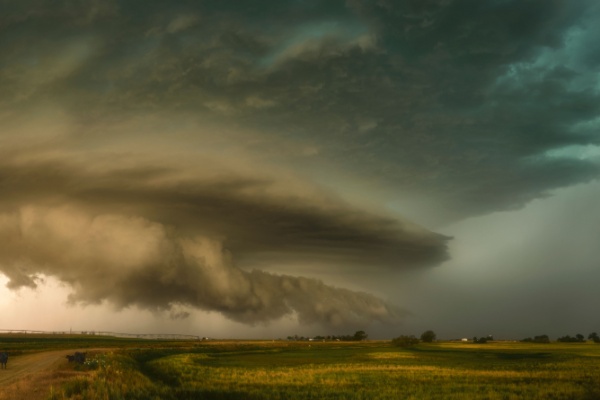
The Southwest monsoon will help fuel the first widespread summer thunderstorms across the interior West this week, bringing threats of gusty winds, blowing dust, downpours and dry lightning that could spark new wildfires.
As AccuWeather reports, temperatures will climb to 100 degrees Fahrenheit or higher in many areas over the next several days, and winds will shift to the south, drawing increasing moisture into the interior West.
This annual weather pattern is known as the North American monsoon. It typically begins with spotty thunderstorms before evolving into more widespread drenching downpours later in the season.
While the monsoon can deliver drought-easing rainfall, precipitation is often unevenly distributed. Early in the season, predominantly dry thunderstorms can produce damaging wind gusts, haboobs and lightning that sparks wildfires.
Different parts of the interior West will experience varying stages of the monsoon over the next several weeks, with conditions differing significantly from one location to another.
Although monsoon thunderstorms sometimes reach nearly to the California coast, that is not expected this week.
However, some thunderstorms are forecast to reach into Las Vegas and the California deserts, as well as parts of the Sierra Nevada near and past the middle of July.
Some of the most frequent thunderstorm activity that could deliver a couple of inches of rain over a several-day span are most likely in Phoenix, Flagstaff and Tucson, Arizona; Albuquerque, Santa Fe and Las Cruces, New Mexico; Las Vegas and Elko, Nevada; El Paso, Texas; Palm Springs, California; Salt Lake City and Cedar City, Utah, and Grand Junction and Durango, Colorado.
With the unfolding of the monsoon, outdoor enthusiasts and motorists are urged to keep alert for rapidly changing weather conditions.
Canyons, arroyos and roads that cross normally dry stream beds can rapidly fill with water even from storms miles away. Hiking should be avoided during the afternoon hours, when lightning storms are most active. Gusty winds in the vicinity of dry storms can bring the visibility to near zero in a matter of seconds.
Because the weather near thunderstorms can be chaotic, the aid and problems created for firefighting efforts can be complicated. On the one hand, any drenching rain will be welcome. On the other hand, little rain, gusty winds and lightning strikes could make matters worse.
—
Photo Credit: Wirestock Creators / Shutterstock.com
