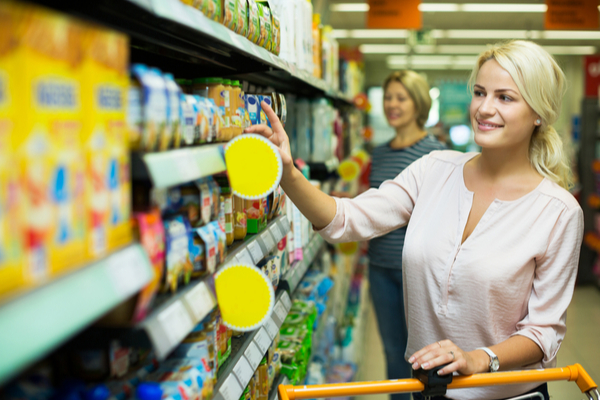
More than seven in 10 Americans (72%) say they want to avoid ultra-processed foods, according to a national survey by Linkage Research, conducted for Food Integrity Collective. But those survey results don’t include a very important subset of the population: those not old enough to talk yet.
As Food & Wine reports, last month, researchers from The George Institute for Global Health published the findings of their study in the journal Nutrients, examining how often ultra-processed foods appear in products intended for infants and toddlers. To get a complete picture, the team analyzed data on 651 products from the Institute’s FoodSwitch database, which, according to a statement, includes “infant and toddler food products sold in the top ten US grocery store chains.”
They noted that the products were assessed using the Nova classification system, which Food & Wine previously explained categorizes products into four groups: Group one is unprocessed foods; group two is “processed culinary ingredients,” which include foods that are still close to their natural state, such as oils, butter, lard, table sugar, honey, and salt; group three is foods that contain added salt, sugar, and oil, such as vegetables in brine, fruits in syrup, canned and cured fish, breads and cheeses, and any “commercial food or drink product made from foods in group one and ingredients from group two”; and group four is ultra-processed foods, which use extracts or ingredients derived from whole foods and are combined with additives.
After analyzing the foods, the researchers found that 71% of grocery store products marketed to babies in the U.S. are classified as ultra-processed foods. “Infancy is a critical time for shaping lifelong eating habits — introducing babies to foods that are overly sweet, salty, and packed with additives can set the stage for unhealthy preferences that last beyond childhood,” Dr. Elizabeth Dunford, a research fellow at The George Institute and an adjunct assistant professor at the University of North Carolina, said in a statement. “We also know that high UPF consumption in children is linked to heart and metabolic conditions later in life, so it’s best to try and avoid introducing them in the first place.”
According to their findings, general additives were the most common ingredient type in baby foods, appearing in 71% of the products they analyzed. This was followed by flavor enhancers (36%), thickeners (29%), emulsifiers (19%), and colors (19%), which together accounted for the most commonly used additive classes. Altogether, they identified more than 105 unique additive ingredients in the dataset.
“We’re seeing a growing body of evidence that certain additives may harm health. With emulsifiers, thickeners, and stabilizers potentially altering gut function, and synthetic colors affecting behavioral outcomes in children, the high use of cosmetic additives found in U.S. baby foods is particularly concerning.” Dunford added. Additionally, they found that ultra-processed foods had twice as much sugar and “consistently higher” sodium levels than their non-ultra-processed counterparts.
The team found that the biggest offenders are almost all snack-size packaged products (94%), which are ultra-processed, followed by 85% of full-size packages. Pouches were also particularly concerning, with 73% qualifying as ultra-processed. As they noted in a statement, “With U.S. consumers increasingly shifting towards more convenient infant and toddler foods, sales of pouches have grown nearly 900% since 2010.” Dunford added, “While pouches and snacks may seem practical, they are often the most processed and least healthy options.”
And in terms of what could be done, Dunford explained that there are ways to educate consumers about their choices. “Clearer labeling and specific regulation for baby foods are urgently needed to help parents make more informed choices,” the professor said. “Until then, checking the ingredients list is one of the best ways to spot highly processed options — if you see an ingredient you don’t recognize, then it’s probably best to put it back on the shelf.”
—
Photo Credit: Iakov Filimonov / Shutterstock.com