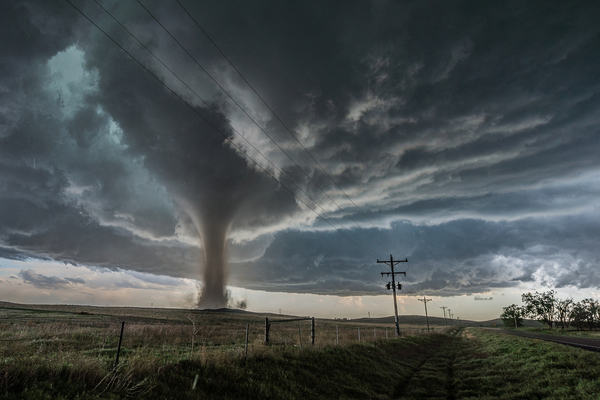
January is the heart of meteorological winter across the Northern Hemisphere, and many associate the month with snowy scenes. However, as AccuWeather reports, two recent outbreaks of severe weather that spawned more than 100 tornadoes across the southern United States prove this month can pack a punch in terms of severe weather.
“It is generally uncommon to see many tornadoes in January,” AccuWeather Lead Long-Range Meteorologist Paul Pastelok said.
Tell that to Oklahoma, a state that experienced not one, not two, but five tornadoes on January 8. Teams from the National Weather Service are still assessing damage in central Oklahoma from those storms.
The agency has confirmed five tornadoes:
- EF-2 in the Purcell area
- EF-1 near the Shawnee Twin Lakes
- EF-1 in north Shawnee
- EF-1 in Wynona
- EF-0 near Lake Thunderbird
Damage in Purcell included an overturned semi, roof and tree damage and downed powerpoles. It’s what you would expect in the spring, not so much in January.
State Climatologist Gary McManus says winter tornadoes aren’t unprecedented, but they are rare, at least until recent times. “It’s not unheard of. We’ve had—before today—we’ve had 30 tornadoes in January in Oklahoma since 1950,” McManus said. “In the last four or five years we’ve had about a dozen in January, as early as January 2nd. So, this isn’t the earliest. It’s certainly not the first January tornado we’ve had.”
But McManus is concerned the severe storm season is off to such an early start.
“It’s something we certainly don’t like to see this early because you worry about, you know, ‘what’s the rest of the year going to be like?'”
Thursday’s tornado warnings were the first to be issued in the nation this year.
Despite the damage from the storms, the first twisters of 2026 resulted in no reported injuries.
Weather Conditions that Produce Tornadoes
Although January is the third least tornadic month on average, according to NOAA and the 1991-2020 average, AccuWeather forecasters say severe weather can happen year-round if the right atmospheric ingredients are in place.
The basic ingredients required for severe weather are unstable airand moisture. The Gulf of Mexico is one of the country’s biggest suppliers of moisture for thunderstorm development across the central United States.
During December through February, which is also known as meteorological winter, the moisture from the Gulf of Mexico doesn’t spread across the country as much as it does during the spring, summer and fall. This is why severe weather outbreaks are less common during the winter.
But, for parts of the country such as the lower Mississippi Valley and Gulf Coast states, the influx of moisture isn’t entirely cut off in the winter months due solely to their proximity to the Gulf of Mexico. As a result, these parts of the south-central U.S. are hotspots for severe weather, even during the winter.
“This is where, most commonly, the warmest air can surge ahead of storms, with the help of the Gulf of Mexico and southwest Atlantic to produce severe weather [and] tornadoes in January,” Pastelok said.
Since 1875, there have been just under 2,000 confirmed tornadoes in 33 states across the U.S. during January, according to data provided by Tornado Archive. Although the highest frequency of twisters in January occurs in states near the Gulf of Mexico, it’s important to note that severe weather can and has happened in states outside the most common areas during the first month of the year. Twisters have been recorded in states such as Pennsylvania, California, Oregon, Washington, Hawaii and New Jersey during the month of January.
—
Photo Credit: Cammie Czuchnicki / Shutterstock.com