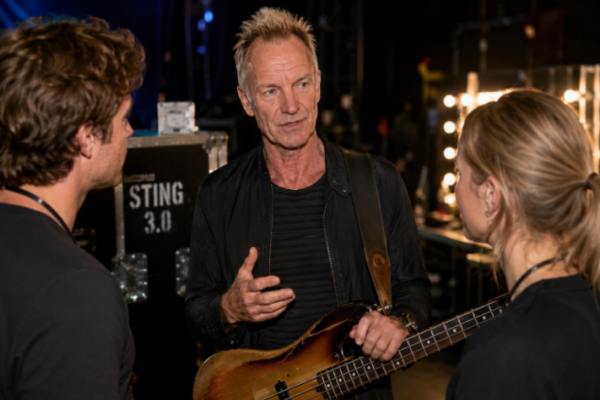
Sting is once again making it clear that fame and fortune do not automatically come with family trust funds.
The legendary former Police frontman recently doubled down on his long-standing belief that children should work for their own success instead of relying on inherited wealth. During an appearance on CBS Sunday Morning, the 74-year-old musician explained that he sees unconditional financial security as damaging rather than helpful.
According to Sting, telling children they never have to work can rob them of ambition, independence, and resilience. He described that mindset as harmful and said he hopes he never sends that message to his own family.
The Grammy-winning artist, whose decades-long career has made him one of music’s most successful performers, said his children were raised with strong expectations around work ethic. While he has supported them through education and opportunity, he believes they should carve out their own paths professionally and financially.
Sting added that his approach is not about withholding support out of harshness. Instead, he sees it as a sign of confidence in his children’s ability to succeed on their own merits. Over the years, he has repeatedly praised them for being independent and motivated.
The comments revived a debate that regularly surfaces whenever wealthy celebrities discuss inheritance. Some fans applauded Sting’s perspective, arguing that financial struggle can build character and drive. Others questioned whether immense wealth should be used to provide greater long-term security for future generations.
Even as the inheritance discussion dominates headlines, Sting remains deeply active creatively. The music icon continues touring with his STING 3.0 shows while also promoting The Last Ship, a project inspired by his upbringing in the shipbuilding communities of northeast England.
For Sting, legacy appears to be about more than money. It is about work, storytelling, and leaving behind values that outlive the bank account.
