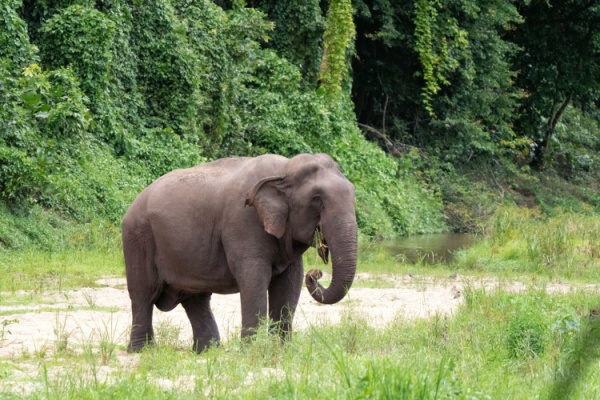
The Smithsonian’s National Zoo in D.C. has welcomed its first Asian elephant calf in nearly 25 years. The female calf, whose name has not yet been decided (that’s where you’ll come in), was born around 1:15 a.m. Monday, Feb. 2 to 12-year-old mother Nhi Linh and 44-year-old father Spike. This is Nhi Linh’s first offspring.
A Tiny Woolly Mammoth
As station WTOP reports, Brandie Smith, John and Adrienne Mars director of the Smithsonian National Zoo, was there when the calf was born and said, “She looks like a tiny woolly mammoth. I think it’s because she’s so fuzzy. But she’s amazing and she’s only been here for a day, and she’s already so much more confident in everything.”
“She’s resilient. She’s got a good set of lungs, which is great. She’s motivated. She was up and walking on her own within several hours, which is great,” added Robbie Clark, acting curator and elephant manager. “And we couldn’t ask for better results in terms of her health this far along.” Because of the timing of the delivery and snowstorm he and his team have been sleeping at the zoo to make sure the birth went smoothly. Clark spent 11 straight days sleeping at the zoo.
Nhi Linh and Spike bred in April 2024, the pregnancy was 21 months. Asian elephant pregnancies last 18 to 22 months on average, the zoo said. “They have a very long pregnancy. They’re developing a really large, 300 pound baby that’s very complex. They need to be able to get up and move around with the herd as quickly as possible,” Clark said.
Asian Elephants Are Endangered
Asian elephants are an endangered species. With fewer than 50,000 Asian elephants left in the wild, every birth is a symbol of hope and a reminder that protecting elephants starts with all of us.
The zoo says the newborn calf will “help strengthen the genetic diversity of the Asian elephant population in North America and around the world.” The calf, who weighed 308 pounds, will spend a month bonding with her herd members behind the scenes until she makes her public debut. The zoo said building those bonds is critical for the baby animal’s development.
“It’s focusing on the bond that calf and mom make, and then also giving that calf time to meet other members of the herd, learn and explore the new world that she’s in,” Clark said. “In a managed program like this, there’s lots of new sights, sounds, smells, and we’ll create a routine. We want the calf to understand what we’re there for, what’s different from her human care support versus her family and herd support.”
Help Name Her!
You can help name the baby girl! The National Zoo has narrowed it down, but the public can vote on the calf’s name from one of four options: Linh Mai, Thảo Nhi, Tú Anh or Tuyết, by making a donation of $5 or more on the zoo’s website until Feb. 13.
Linh Mai: Pronounced: “LIN my” — with a soft g sound at the end of “Linh”. Spirit blossom — Linh means “spirit” or “soul,” and Mai refers to the apricot blossom, a flower associated with Tết (Lunar New Year), which begins Feb. 17.
Thảo Nhi: Pronounced: “tOW” — rhymes with cow — “nee”. “Gentle and beloved” – Thảo means gentle or kind and is associated with nature; Nhi means small, little one, or beloved.
Tú Anh: Pronounced: “tOO ahn,” with a soft “ng” sound at the end of Anh. “Bright and intelligent” – Tú suggests excellence or beauty; Anh suggests brightness and intelligence.
Tuyết: Pronounced: “TWET,” rhymes with wet. Traditionally means “snow.” Nhi Linh gave birth in the aftermath of winter storm Fern, which dropped 6 inches of snow and ice in the D.C. area.
The zoo’s Elephant Cam went offline Jan. 23 as Nhi Linh entered her birth window. The elephant habitat is limited to in-person viewing at this time. Zoo members will be invited to an exclusive viewing of Nhi Linh and the calf once a date is announced.
—
Photo Credit: ARGUS PHOTOGRAPHER / Shutterstock.com