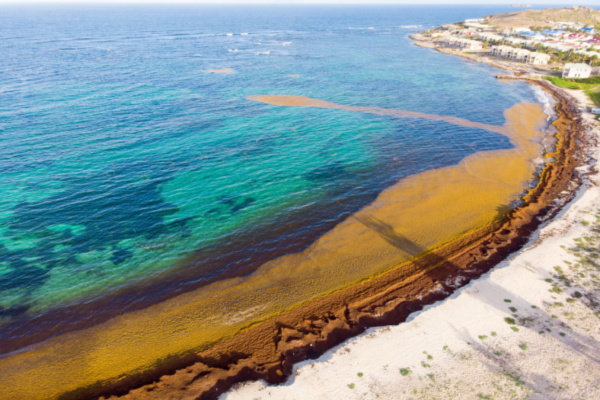
Tracking seaweed might sound like a boring job, but the scientists at the University of South Florida Optical Oceanography Lab take it very seriously.
As AccuWeather reports, at the end of May, they sounded the alarm: Sargassum seaweed is forming earlier and in more abundance than ever this season in the Atlantic — worse than the record year of 2022.
Where is the seaweed now, and where will it go?
At the end of May, the largest concentration of the 37.5 million metric tons of Sargassum was in the the eastern Caribbean Sea and western Atlantic. This broke historical records for the basin in both April and May. According to The Guardian, piles of the stinky seaweed have rolled up on beaches in Puerto Rico already this June.
Some of that seaweed will make it to Florida and the Gulf Coast later in the summer, but the devil is in the details. Ultimately, currents and wind patterns will dictate which beaches are inundated with the brown stuff.
The Miami area is area is listed as a “high risk” for Sargassum currently by NOAA’s CoastWatch website. The eastern shore of Mexico is also in the high risk, and many videos have shown seaweed on the beaches this week.
What is Sargassum?
Sargassum is a kind of seaweed, which is a type of algae. Sargassum never touches the seafloor until it dies, tends to float in island-like chunks and serves as breeding grounds for fish, turtles, birds and other animals.
Is seaweed dangerous?
The hydrogen sulfide gas it releases when it rots is not only stinky but can irritate your eyes, nose and throat, the Miami Herald says. The seaweed can also contain jellyfish or sea lice that can irritate your skin.
Because it discourages beach tourism, in 2022, Miami-Dade County spent $3.9 million to haul the seaweed to a landfill before tourists arrived each morning. This year, officials launched a competition to find new ways to recycle the piles of sargassum—and they may have no shortage of raw material to work with.
—
Photo Credit: Multiverse / Shutterstock.com