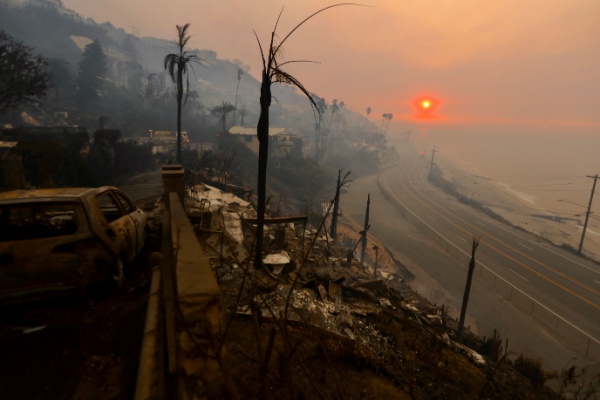
One year after deadly wildfires swept through Los Angeles County and destroyed thousands of homes, Southern California is working to rebuild and prevent future fires from becoming as catastrophic.
As AccuWeather reports, on Jan. 7, 2025, the first of a dozen wildfires ignited near the Palisades, fueled by strong Santa Ana winds and sending families scrambling to evacuate. After the fires were contained — including blazes in Eaton Canyon near Altadena — an estimated $275 billion in damage was left behind, and 31 lives were lost.
Rebuilding is Underway
A year later, officials with the California government say rebuilding is underway, with permit reviews now taking an average of 30 days. As of Jan. 6, more than 6,100 permit applications had been submitted, with more than 2,600 approved by city and county agencies, according to Gov. Gavin Newsom’s office.
California officials say they are working to speed up permitting compared to previous wildfire disasters and are taking lessons from other major events, including the 2023 Maui fires in Hawaii. By comparison, one year after the 2018 Camp Fire — which also destroyed thousands of structures — fewer than 400 permits had been issued.
“Many people are still struggling with the first steps of recovery one year after the devastating fires. The process to secure permits, clear debris and obtain insurance claim payouts has been incredibly challenging for some families and businesses,” AccuWeather Chief Meteorologist Jonathan Porter said. “Thousands of families were displaced by the fires, and many are still facing an uncertain future. Some people have left the region, and others have decided to move out of California.”
Debris Removal is a Massive Undertaking
Crews have carried out a historic debris removal effort following the Los Angeles fires, clearing more than 2.5 million tons of ash, debris, metal and contaminated soil within nine months. State officials said the amount of debris removed from the Eaton and Palisades fires alone is twice the volume removed from Ground Zero after the Sept. 11, 2001, terrorist attacks.
“The total tonnage removed from the Eaton and Palisades Fires is equivalent to 92 Statues of Liberty. It is twice the amount removed from Ground Zero after 9/11,” Newsom’s office said in a news release.
Debris removal is a massive undertaking after wildfires. Following the 2023 fires on Maui, trucks transported the equivalent of five football fields of debris stacked five stories high to a final disposal site last summer.
Recovery Efforts Will Cost Billions
AccuWeather meteorologists say recovery efforts in California will cost billions of dollars over the next decade and extend far beyond financial losses.
“The economic fallout from these wildfires is far from over. California has faced an insurance availability and affordability crisis for years. It has been difficult for some people to secure coverage after the fires, especially in high-risk areas,” Porter said. “Recent research found that heart attacks, lung issues and other medical conditions in Los Angeles County spiked in the days and weeks following the wildfires.”
A recent study found a more than 200% increase in health problems requiring emergency medical attention after the January 2025 fires in Los Angeles County.
“More people may develop health issues linked to exposure to toxic wildfire smoke and debris, along with the stress of evacuations or losing their homes to the fires,” Porter added. “Long-term physical and mental healthcare costs are a key factor that AccuWeather experts consider the long tail of negative medical impacts in our total damage and economic loss estimates for extreme weather disasters.”
Preventing Future Disasters from a Year-Round Threat
As experts warn that California’s wildfire season is no longer confined to specific months but poses a year-round threat, state and local leaders are exploring new strategies to protect communities when — not if — fires occur.
Moving forward, California’s Board of Forestry and Fire Protection is developing new rules under 2020 legislation that would prohibit flammable materials, including vegetation, within 5 feet of a home. NPR reports that the proposed “Zone Zero” policy has faced pushback from residents — including some fire survivors — who are concerned about losing greenery around their homes.
Since the Los Angeles fires, nearly $63 million in new wildfire prevention grants have been awarded to support wildfire resilience and environmental protection efforts. New firefighting equipment, a dedicated strike team for Los Angeles and a statewide LiDAR mapping system are expected to improve fire suppression and tracking during future fires.
“The Los Angeles fires showed us we need to move faster and smarter. We’re streamlining projects that used to take years, deploying new technology to target our efforts where they matter most, and investing record funding in prevention,” Newsom said in a statement. “We’re turning hard lessons into concrete action and delivering results on the ground.”
—
Photo Credit: Arprince / Shutterstock.com