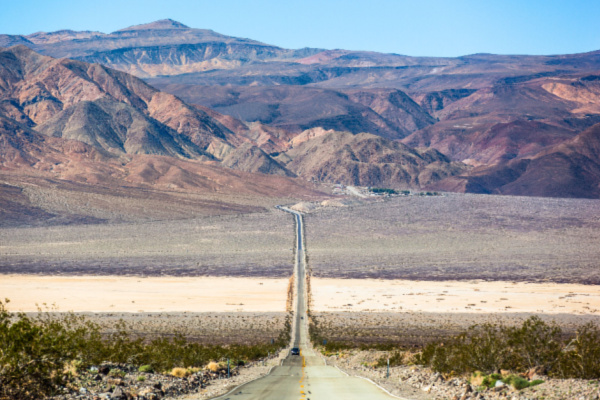
California’s Death Valley National Park just experienced its wettest November on record, resulting in a rare phenomenon that is not often associated with one of the driest places on Earth.
As AccuWeather reports, the lowest areas of the park have turned into a shallow lake, the second time in two years that heavy rain has transformed the desert landscape.
Lake Manly returns to Death Valley
Death Valley logged its wettest fall on record with 2.41 inches of rain, more than the 2.20 inches that typically fall in the park throughout the entire year. Most of the rain, 1.76 inches, fell in an eight-day span in mid-November. Weather records date back to 1911. “At Badwater Basin, which lies 282 feet below sea level and is the lowest point in North America, rainwater has formed a shallow lake,” the National Park Service (NPS) said in a news release.
The lake, known as Lake Manly, is much smaller and shallower than the one that formed after Hurricane Hilary doused the region in 2023. The lake only appears after times of extreme rainfall. “In most places [the water] would not rise above the tops of your shoes,” the NPS said.
Kayakers and paddleboarders were able to enjoy Death Valley in a way that few people had ever done in early 2024. Hurricane Hilary set the stage for the return of Lake Manly after unleashing a year’s worth of rain on Aug. 20, 2023. This was followed up by a wet winter, including multiple days of heavy rain in Feb. 2024.
Although the lake is not nearly deep enough for kayakers currently, additional rain this winter could help Lake Manly expand. As of mid-December, the lake resembles more of a large puddle, better suited for photographers to capture unique reflections across the shimmering landscape.
Will this rare rain set up a superbloom in 2026?
Heavy rain in a place known for extremes naturally leads to another question: Could this be the setup for a spring wildflower show?
“While rainfall is a key ingredient for an above-average bloom, it is only one of several factors needed for a significant wildflower display,” the NPS said. “It is too early to predict whether conditions will lead to a spring ‘superbloom‘ like the one seen in 2016.”
Big picture: The recent storms have improved the odds of a good wildflower season, but they haven’t guaranteed anything yet. Visitors hoping for carpets of color will have to wait until late winter and early spring to see how conditions evolve.
In the meantime, the same storms that revived Lake Manly have also left their mark on the park’s infrastructure. Flooding and debris have forced numerous road closures, and some paved roads remain impassable. Many of the park’s best-known viewpoints and landmarks — including Zabriskie Point, Dante’s View, Badwater Basin and Mesquite Sand Dunes — are still open, but unpaved roads may be damaged or washed out.
Anyone planning a trip is urged to check current conditions, be cautious on back roads and be prepared to self-rescue if they venture into more remote areas.
—
Photo Credit: Radoslaw Lecyk / Shutterstock.com