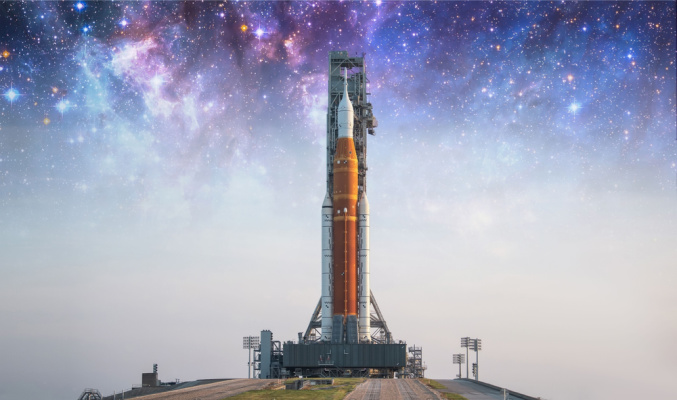
NASA has set April 1 as the target launch date for the Artemis II mission, sending four astronauts on a 10-day test flight around the moon.
According to NASA, at 11:21 a.m. EDT on Friday, March 20, NASA’s Artemis II SLS (Space Launch System) rocket and Orion spacecraft arrived at Launch Pad 39B after an 11-hour journey from the Vehicle Assembly Building at the agency’s Kennedy Space Center in Florida. NASA says that teams were able to replace an electrical harness faster than expected.
Flight Readiness Review (FRR)
As AccuWeather reports, the agency announced the new launch date after completing a flight readiness review, or FRR, which included a risk assessment for the four-person crew. “At the conclusion of the FRR, all the teams polled go to launch and fly Artemis II around the moon pending completion of some of the work before we roll out to the launch pad,” said Dr. Lori Glaze, acting associate administrator of NASA’s Exploration Systems Development.
Artemis II will carry NASA astronauts Reid Wiseman, Victor Glover and Christina Koch, along with Canadian Space Agency astronaut Jeremy Hansen, on a 10-day journey around the far side of the moon and back. The mission will test spacecraft systems and help pave the way for future lunar exploration. “An incredible amount of work has gone into preparing for this test flight by thousands of people across our integrated team,” Glaze said. Wiseman, Glover, Koch and Hansen were part of the FRR, joining remotely from Houston.
If the April 1 launch is delayed because of technical or weather issues, NASA has additional launch opportunities from April 2 through April 6 and again on April 30 before the mission would slip until later this spring.
When will Astronauts Actually Return to the Moon?
The Artemis II launch follows the uncrewed Artemis I flight, the first launch of the SLS rocket and Orion spacecraft around the moon in 2022.
A third mission had been slated to return astronauts to the lunar surface for the first time since the Apollo program more than 50 years ago. However, under the leadership of NASA Administrator Jared Isaacman, some of those mission parameters have changed.
Under the new plan, Artemis III, targeted for mid-2027, will still include a crewed flight but will focus on demonstrating rendezvous and docking capabilities involving Orion and commercial partners SpaceX and Blue Origin instead of a moon landing.
Artemis IV, planned for 2028, could mark the first human moon landing since Apollo 17 in 1972. NASA also plans to begin building a lunar base by late 2028.
—
Photo Credit: Dima Zel / Shutterstock.com