Each March 3 in music history brings a blend of milestones across the decades, tracing shifts in popular taste and the evolution of genres.
In the mid-1940s, legendary singer Bing Crosby revisited one of his early hits, recording Temptation again with John Scott Trotter’s Orchestra, reminding audiences of the enduring power of the American songbook. Two decades later, in 1957, rock ’n’ roll’s rise hit resistance when church authorities in Chicago took the unusual step of banning the music from Catholic schools, underscoring how disruptive new styles could be to established culture.
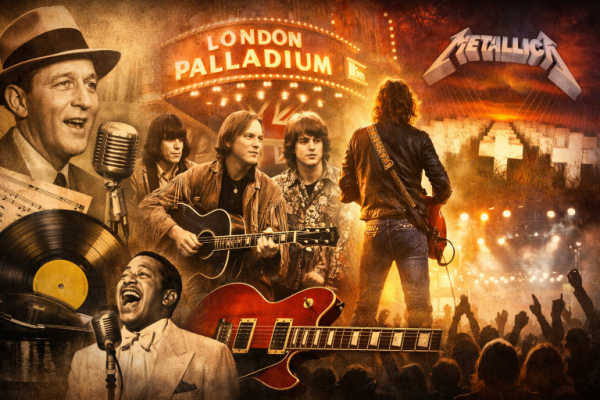
The mid-1960s saw the birth of a band that would shape the sound of folk-rock and country-inflected rock. Neil Young, Stephen Stills, and Richie Furay joined forces to form Buffalo Springfield, whose jangly guitars and thoughtful lyrics helped define an era.
Across the pond, Petula Clark brought her polished pop to the London Palladium in 1967, performing before royalty and showcasing how British pop export stars could reach elite cultural stages. By the close of the decade, rock was sweeping arenas worldwide: in 1979, Van Halen embarked on their first world tour, laying the groundwork for stadium-filling guitar-driven rock.
March 3, 1986 marked a defining moment for heavy metal. Metallica unleashed Master of Puppets, an album now celebrated as a landmark in the genre and a high point of ’80s metal innovation.
Beyond these highlights, March 3 is peppered with jazz and pop landmarks, from Cab Calloway’s million-selling “Minnie the Moocher” to chart-toppers and classic albums that would influence generations of musicians. Together, these events capture the broad sweep of music history on a single date, illustrating how every era writes its own chapter in the ever-unfolding story of sound.