Major League Baseball has taken a dramatic step toward reshaping the sport’s financial landscape, unveiling a salary cap proposal that immediately reignites memories of one of the most contentious labor battles in baseball history.
The plan would introduce a payroll ceiling and floor beginning with the 2027 season, creating spending boundaries for all 30 clubs. League officials say the goal is to narrow the gap between baseball’s biggest spenders and its lowest-budget organizations while promoting greater competitive balance across the sport.
Under the proposal, teams would be required to operate within a defined payroll range. High-spending franchises would face significant pressure to trim expenses, while lower-spending clubs would be required to invest substantially more in player salaries.
League leadership argues that the current system allows payroll disparities to grow too large, creating concerns among fans and owners about competitive fairness. The proposal also includes a broader revenue-sharing structure designed to distribute financial resources more evenly throughout the league.
The reaction from the players’ side has been swift and predictable. The Major League Baseball Players Association remains firmly opposed to any salary cap system, maintaining a position that has defined labor negotiations for decades. Union leaders view a cap as a restriction on player earning potential and a mechanism that primarily benefits ownership rather than the game’s workforce.
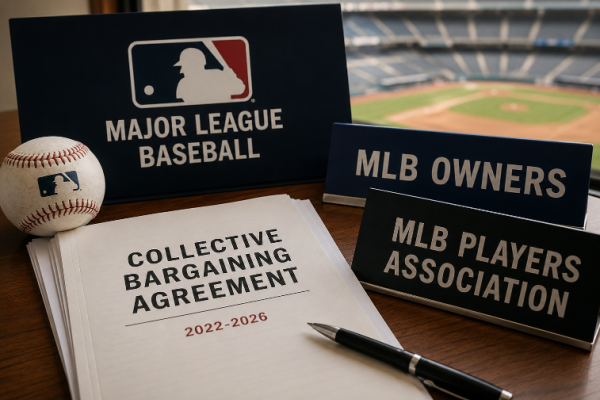
The debate arrives at a pivotal moment for baseball. The current collective bargaining agreement expires after the 2026 season, leaving both sides with limited time to negotiate a new framework. While discussions are expected to continue, the introduction of a salary cap places one of the sport’s most divisive issues squarely at the center of negotiations.
The proposal’s impact would extend beyond labor talks. Several of baseball’s wealthiest franchises would be forced to make significant roster and payroll adjustments, while clubs at the lower end of the spending spectrum would need to increase investments in player salaries.
For now, the proposal serves as an opening salvo in what could become baseball’s most important labor battle in more than three decades. Whether it leads to compromise, confrontation, or another prolonged work stoppage remains one of the biggest questions facing the sport’s future.
