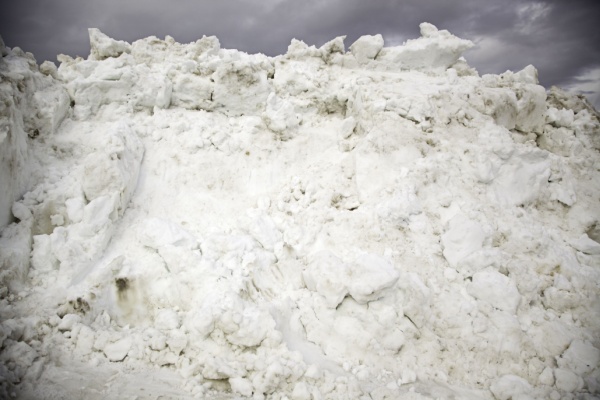
After a long winter that dumped over 60 inches of snow on the Boston area, a massive “snow pile” that took months to dissolve, has finally melted away.
What emerged from a massive snow pile in Somerville, Massachusetts, just northwest of downtown Boston, were cars and debris piles that had been buried for months. More than half a dozen vehicles were revealed by the melted snow pack, and they weren’t just random cars parked in the wrong spot when the snow started to accumulate. Somerville Public Works said the vehicles were already slated to be scrapped, and before the winter storms arrived, it was easier to leave them in place and let the snow bury them than use resources to move them.
As AccuWeather reports, the entire Boston area measured more than 60 inches of snow this past winter, including a significant nor’easter in late January and a blizzard in late February. What once looked like towering snowbanks now resembles giant slabs of dirty ice, streaked with garbage and debris.
Why did it take so long for the snow to melt?
Despite bursts of warm weather in the Boston area since the late-February blizzard, the massive snow pile has been slow to melt.
“The snow piles are large, so it takes a lot of energy from the sun to make a dent into the snow piles,” AccuWeather Meteorologist Peyton Simmers said. “Additionally, the snow is compacting and more forming into ice, which takes longer to melt as there is a lot of snow underneath the pile that has not seen direct sunlight in months.”
How did the Snow Become almost Black?
The snow looks nothing like the white powder that piled up during the winter storms this past season. “There is a lot of road debris, dirt and vehicle exhaust that the snow picks up but does not immediately turn dirty,” Simmers explained. “As the snow melts or sublimates, it leaves behind the dirt, debris and exhaust particles making the snow more dirty.”
Following the blockbuster winter of 2014-15 in Boston, when the city measured more than 110 inches of snow, a 70-foot-tall snow pile in a parking lot did not fully melt until mid-July. It is not unusual for snow piles to linger well into spring and, in some cases, into summer.
—
Photo Credit: Celiafoto / Shutterstock.com
