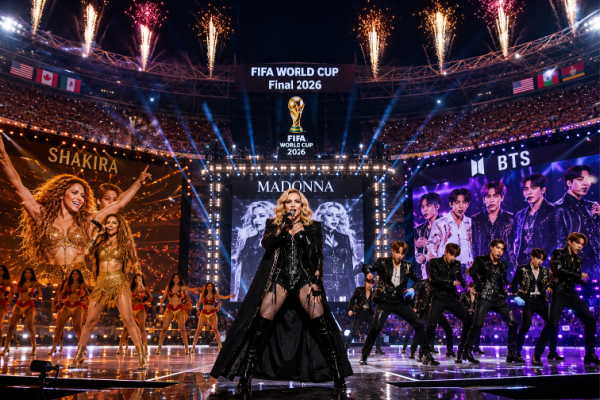
FIFA is turning the World Cup final into a full-scale entertainment spectacle.
For the first time in tournament history, the FIFA World Cup Final will feature a halftime show, and organizers are going big right out of the gate. Global superstars Madonna, Shakira, and BTS have officially been announced as co-headliners for the historic performance set for July 19, 2026, at MetLife Stadium in New Jersey.
The halftime event will be curated by Coldplay frontman Chris Martin, adding another layer of star power to an already massive production. FIFA says the show is designed to merge music, football, and social impact on one of the world’s biggest stages.
The announcement marks a major shift in how FIFA presents its marquee event. While elaborate opening ceremonies have long been part of international tournaments, the World Cup final itself has traditionally stayed focused on the match. This new halftime concept moves closer to the entertainment model made famous by the Super Bowl in the United States.
Shakira’s inclusion feels especially fitting for longtime football fans. Her 2010 World Cup anthem “Waka Waka” became one of the most recognizable songs in tournament history, and she remains closely tied to global soccer culture. Madonna brings decades of pop dominance and international appeal, while BTS delivers one of the most passionate worldwide fanbases in music today.
FIFA and Global Citizen also confirmed that the event will support the FIFA Global Citizen Education Fund, which aims to improve access to education and football programs for children around the world. According to organizers, a portion of World Cup ticket revenue will contribute to those efforts.
The 2026 tournament itself is already expected to be historic. Hosted across the United States, Canada, and Mexico, the competition expands to 48 teams and 104 matches, making it the largest FIFA World Cup ever staged.
Fans immediately flooded social media following the announcement, with many calling the lineup one of the most internationally balanced entertainment rosters ever attached to a sporting event. Between Latin pop, K-pop, and classic American pop royalty, FIFA appears determined to make the final feel less like a match and more like a worldwide cultural moment.
One thing is clear: the World Cup final is no longer just about football.
