Lindsey Vonn’s pursuit of one more Olympic moment ended in silence on the slopes of Cortina d’Ampezzo.
Just seconds into the women’s downhill, Vonn lost control after clipping a gate, launching into a violent tumble that left her sprawled on the course as the crowd watched in stunned quiet. Her screams were audible as medical teams rushed in, and the race atmosphere quickly shifted from anticipation to concern.
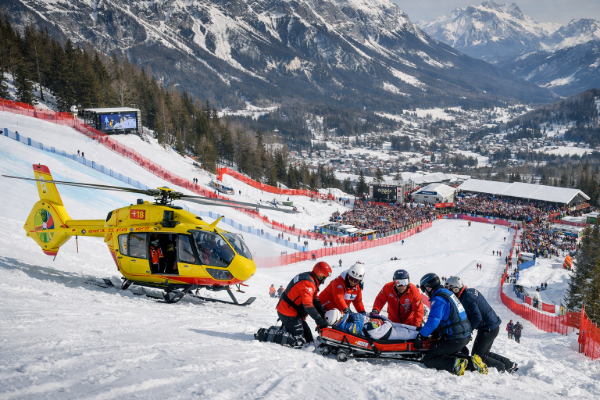
After prolonged treatment on the snow, Vonn was secured to a gurney and flown away by helicopter, a grim repeat of a scene from less than two weeks earlier. Doctors later confirmed she suffered a fracture in her left leg and underwent surgery to stabilize the injury. Officials said she remained in stable condition and was surrounded by experienced medical staff.
The crash cast a heavy shadow over what had been one of the most compelling storylines of the Games. At 41, Vonn had returned to elite competition after nearly six years away, racing with a partially titanium right knee and lingering damage in her left. Against expectations, she quickly reestablished herself as a contender and arrived at the Olympics leading the World Cup downhill standings.
Cortina held special meaning for Vonn, a place where she had collected victories, records, and emotional milestones across two decades. She had tested her knee during training runs earlier in the week and spoke openly about the magnitude of the challenge ahead, calling it the most dramatic comeback of her career.
Instead, the mountain delivered a harsh ending. The severity of the crash raised immediate questions about whether Vonn’s competitive career has reached its final chapter, a possibility underscored by the presence of her family in the stands and the somber reaction from fellow athletes.
As Vonn was taken from the course, her teammates carried on under extraordinary circumstances. Breezy Johnson captured gold in the downhill, becoming only the second American woman to do so, but her victory came amid visible emotion and reflection on how quickly Olympic dreams can vanish.
The sport’s leaders and stars responded with admiration rather than shock. Alpine skiing has always demanded risk, and Vonn built her legacy by confronting it head-on. Her willingness to race again, even after years of injuries and surgeries, became a symbol of resilience that resonated far beyond medal counts.
The finish line in Cortina may never see Lindsey Vonn race again, but her imprint on the sport is secure. From daring comebacks to record-breaking runs, she turned speed into spectacle and pain into perseverance. This time, the comeback did not end in celebration, but the courage behind it remains unmistakable.