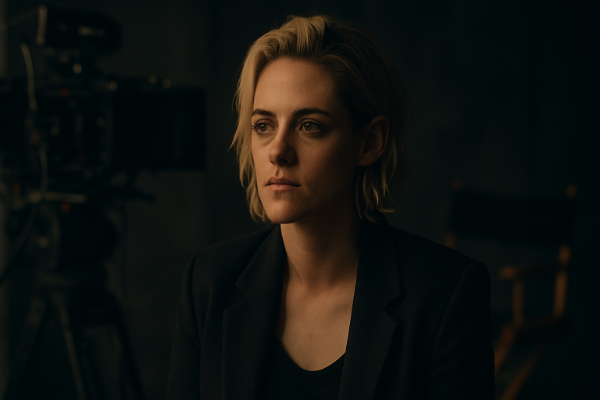
Kristen Stewart has stirred fresh conversation about gender and performance in Hollywood. In a recent interview with the New York Times she described acting as “inherently vulnerable and therefore quite embarrassing and unmasculine,” arguing that doing justice to a character requires emotional exposure often misunderstood — or even derided — in a traditional masculine framework.
Stewart pointed to the phenomenon of “method acting,” used frequently by male actors, as a way to soften or mask that vulnerability. She noted the rituals that sometimes precede intense scenes — pre‑scene workouts, adopting a tough exterior, or what she described metaphorically as “gorilla chest‑pounding.” These gestures, she argued, are less about the work and more about making emotional openness appear “manly.”
She also challenged gendered double standards around emotional expression. While male actors are often praised for “retaining self” under pressure, female actors undertaking similar emotional labor may be dismissed as unstable or overly emotional. “Have you ever heard of a female actor that was method?” Stewart asked — raising a broader question about who gets credit for depth and who gets stigmatized for vulnerability.
These observations come at a moment when Stewart is expanding her influence beyond acting. With her directorial effort, The Chronology of Water, she has stepped into a more powerful role behind the camera. Her comments thus feel like part of a larger reckoning: not just with how performance is perceived, but with how power, gender, and vulnerability intersect in filmmaking.
Stewart’s remarks may provoke discomfort — especially among those invested in traditional notions of “masculinity.” But in doing so, she prompts a necessary reexamination of what we value in performance and who gets to be taken seriously when they bare their soul on screen.