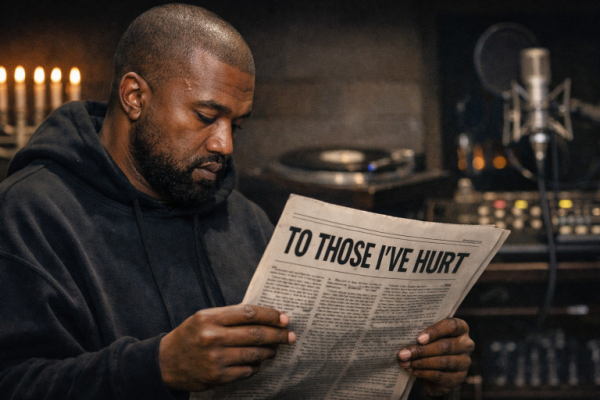
Ye, the artist formerly known as Kanye West, took an unusual and highly public step on January 26, 2026, by publishing a full‑page letter in The Wall Street Journal apologizing for a string of antisemitic remarks and erratic behavior that have dominated headlines and damaged his reputation in recent years. The open letter, titled “To Those I’ve Hurt,” was paid for by his Yeezy brand and positioned as both an admission of wrongdoing and an explanation of what he now calls deeply regrettable actions.
In candid language, Ye acknowledged that many of the comments and behavior that drew worldwide condemnation stemmed from struggles with mental health linked to an undiagnosed brain injury suffered in a 2002 car accident. He said that deeper trauma to his frontal lobe went unnoticed and untreated for decades, contributing to a bipolar type‑1 disorder diagnosis that was only properly addressed in recent years. According to his letter, untreated manic episodes led him to “lose touch with reality,” resulting in harmful public outbursts.
Ye’s apology did not mince words about the pain he caused, especially to Jewish communities offended by his antisemitic statements and imagery. In the letter, he said he is not a Nazi or antisemite and expressed love for Jewish people while also apologizing to the Black community for letting down a foundational audience in his career.
Beyond attributing his conduct to mental health challenges, Ye emphasized his ongoing efforts toward accountability and recovery. He highlighted therapy, medication, and the encouragement of his wife as critical in his journey toward stability. He also mentioned finding solidarity and insight through online mental health communities. The apology outlined a desire for patience and understanding rather than sympathy as he continues to rebuild his life and artistic identity.
The public apology aligns with other elements of Ye’s evolving career, including the impending release of new music. Although he framed the letter as a sincere effort to make amends, the timing inevitably intersects with discussions around his future art and the legacy of one of the most influential—but most controversial—figures in contemporary hip hop and popular music.