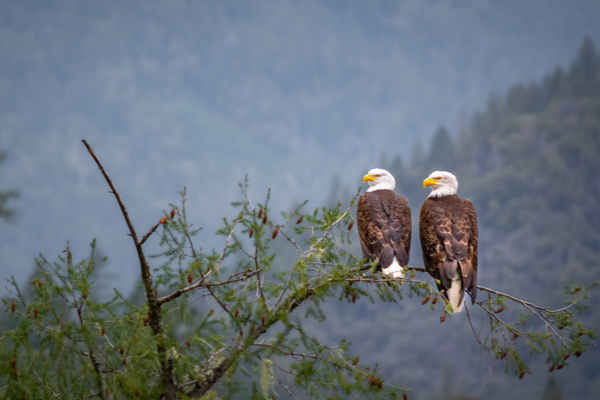
May 19 is National Endangered Species Day. Thanks to the Endangered Species Act (ESA), in effect since 1973, almost two thousand of endangered species once thought to be on the brink of extinction have had a resurgence.
The ESA remains one of the most popular and effective conservation laws ever enacted in the U.S., with 84 percent of Americans in support of it today. According to Earthjustice, the ESA has had a 99% success rate, saving numerous species including the nation’s winged symbol, the bald eagle, Florida manatee, the gray wolf, and many other iconic animals that would have otherwise disappeared forever. Humans also benefit immensely from the bedrock environmental law, which helps keep ecosystems intact that impact everything from agriculture to clean water access and disease prevention.
What is “Harm?”
As NPR reports, last year, the Trump Administration attempted to gut the original Endangered Species Act by changing the meaning of the word “harm.” In 2025 the administration proposed a rule change that would essentially prohibit only actions that directly hurt or kill actual animals, not the habitats they rely on. If finalized, the change could make it easier to log, mine and build on lands that endangered species need to thrive.
Under the Endangered Species Act, it’s illegal to “take” an endangered species. By law, “take” is defined to mean actions that harass, harm, or kill species. For decades, federal agencies have interpreted “harm” broadly, to include actions that modify or degrade habitats in ways that impair endangered species’ ability to feed, breed or find shelter.
That interpretation has been a crucial part of how the ESA has protected over 1,700 species since its passage in 1973. It’s helped preserve spawning grounds for Atlantic sturgeon, allowing them to mate and sustain the population. It has protected old-growth forests in the Pacific Northwest that house northern spotted owls, saving them from extinction.
A Federal Court has Restored Key Values of the ESA
But in March of this year, a federal court struck down the Trump administration’s attacks against the Endangered Species Act (ESA), restoring key values of the bedrock environmental law to the status it held for decades before the first Trump administration went after the bedrock environmental law. After a seven-year legal saga, the Northern District of California Court found that a series of regulations from 2019 and 2024 were in clear violation of the statute, and ordered those regulations immediately vacated. The ruling will derail ongoing efforts by the current administration to further weaken the ESA.
The ruling reaffirms that federal agencies must use the best available science when assessing harm to species, they cannot ignore incremental harm to critical habitat, and the agencies must firmly commit to any measures relied upon to reduce harm to imperiled plants and animals. The Center for Biological Diversity, Sierra Club, and WildEarth Guardians, represented by Earthjustice, challenged regulations issued seven years ago by the first Trump administration, as well as inadequate rules issued under President Biden.
“Extinction is forever, and today’s ruling strikes down regulations that deprived vulnerable species of a last chance at survival,” said Ben Levitan, Earthjustice senior attorney. “This ruling sends a strong signal to the Trump administration that its pending plans to further weaken the rules will violate the law.”
“For more than 50 years, the Endangered Species Act has been one of the most successful conservation laws we have,” said Joanna Zhang, endangered species advocate with WildEarth Guardians. “This victory gives vulnerable species and the ecosystems we all rely on a chance to recover in the face of the climate crisis and relentless pressure from extractive industries.”
“I’m thrilled the court rejected these efforts to gut endangered species protections and eviscerate a law Americans love,” said Ryan Shannon, a senior attorney at the Center for Biological Diversity. “We’re in an extinction crisis that demands urgent action to prevent thousands of animal and plant species from disappearing forever. Trump is hellbent on serving corporations at the expense of endangered wildlife, but thankfully the law protects these critters and the places they live.”
Animals Protected by the ESA
The ESA is needed more than ever today, with over one-third of plants and animals in the U.S. at risk of extinction, in large part due to human activities that destroy habitat, overexploit and kill species, pollute water systems, and speed up climate change.
Some of the most prominent U.S. animals currently on the endangered list include:
- Mammals: Black-footed ferret, Florida manatee, red wolf, Florida panther, North Atlantic right whale, and Key deer.
- Birds: California condor, whooping crane, and the Puerto Rican parrot.
- Reptiles & Amphibians: Kemp’s ridley sea turtle, loggerhead sea turtle, and the Houston toad.
- Fish: Alabama sturgeon.
To search for a specific animal or explore the comprehensive, ever-updating database of listed species, you can check the official U.S. Fish and Wildlife Service ECOS or look up local marine and coastal listings via the NOAA Fisheries portal.
—
Photo Credit: Petar Marshall / Shutterstock.com
