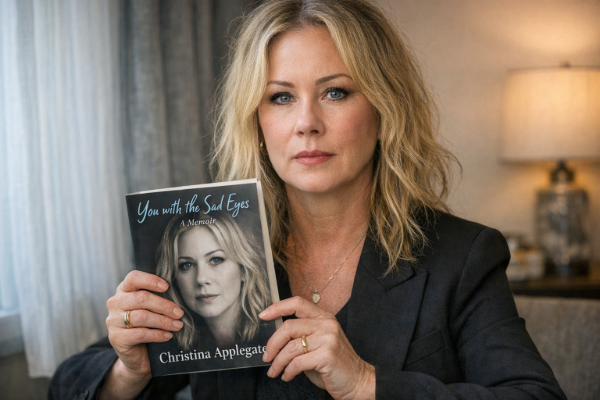
Christina Applegate has never been known for playing it safe, and her new memoir proves she has no intention of starting now.
You with the Sad Eyes: A Memoir presents a life story marked by sharp wit, unfiltered emotion, and a refusal to tidy up painful truths for public comfort. The veteran performer delivers a deeply personal account that moves between dark humor and stark honesty, offering readers an intimate look at the triumphs and traumas that shaped her.
Applegate recounts a turbulent childhood defined by abandonment, addiction, and instability at home. As an adult, she faced further hardship through abusive relationships and an enduring struggle with self-worth. Despite international fame and repeated recognition for her appearance, she reveals a persistent internal battle with body image and confidence.
Her career journey unfolds alongside those personal chapters. From her early start as a child performer to becoming a household name in television comedy, Applegate details the professional milestones that brought acclaim while often masking private pain. She revisits the roles that defined her public image, from the irreverent sitcom persona that launched her fame to later performances that showcased her emotional range and dramatic depth.
The memoir also opens a candid window into Hollywood life, sharing stories of high pressure auditions, physically demanding stage performances, and moments of youthful misjudgment that she now views with hard earned perspective. The tone shifts seamlessly between laugh out loud memories and sobering reflections, mirroring the unpredictable rhythm of her life.
Health battles form some of the book’s most affecting passages. Applegate writes frankly about surviving breast cancer and confronting the emotional aftermath she once felt pressured to downplay in public. She expresses regret over presenting herself as relentlessly upbeat during interviews, believing that doing so concealed the complex reality many patients endure.
Her diagnosis with multiple sclerosis marked another life altering chapter. She describes the daily physical challenges of the chronic illness and the ways it has reshaped her independence, mobility, and sense of identity. Simple routines have become logistical hurdles, forcing a slower pace and a redefinition of normal life.
Rather than retreating from the spotlight, Applegate has embraced openness. She co-created a podcast dedicated to conversations about living with MS, aiming to provide solidarity and practical guidance for others navigating similar diagnoses. That same spirit of transparency defines her writing, which avoids polish in favor of emotional accuracy.
The memoir itself emerged from years of personal reflection. Drawing from old diaries and extensive recorded recollections, Applegate worked closely with editors to shape a narrative that preserves the rawness of her experiences. The result is a portrait of resilience that does not rely on inspirational clichés but instead acknowledges how pain and success often exist side by side.
Ultimately, Applegate presents vulnerability not as weakness but as a form of connection. By sharing uncomfortable truths, she hopes readers facing their own hardships feel less isolated and more empowered to speak openly about their struggles.
