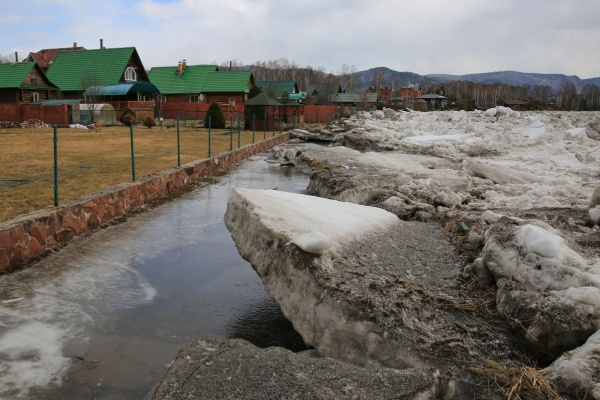
On February 20, an ice jam break on the Allegheny River in Pennsylvania triggered a flash flood warning in multiple counties. As temperatures rose out of the winter lows, ice on French Creek in Crawford County and Oil Creek in Venango County caused raised water levels and ice jams, prompting a warning to local residents and businesses.
The National Weather Service (NWS) in Pittsburgh issued a flash flood warning for Venango County Friday morning, from around 11 am until 4 pm due to reported ice jams in the southwestern part of the county. The NWS said local law enforcement reported an ice jam on the Allegheny River at Emlenton, PA, broke, causing flash flooding downstream. The Emlenton Fire Department also posted the following on their Facebook around 8:15 am Friday: “If you hear a prolonged blast of the fire siren, residents near the river should leave immediately.”
On the same day, the Oil City Fire Department said Oil Creek was approaching the overflow stage, causing flooding for several businesses in Oil City and that they’re coordinating with city officials in the event of any evacuations. Should they be necessary, the fire department said affected businesses and residents will be notified directly and they are encouraging residents to be reachable and ready to act quickly should they be contacted.
And in Northeast Ohio, The National Weather Service office there was keeping an eye on several rivers across the region during the same week due to ice jams, although flooding concerns there were easing. Some ice remained at the mouth of the Grand River in Lake County, but it wasn’t posing a huge risk, according to Jim Sullivan, a meteorologist with the NWS. “From all of January being so cold, we had pretty substantial ice development across area rivers and across Lake Erie as well,” she said.
When the region begins to warm up, the ice on the river is dislodged and begins to flow with the water. When it gets to the mouth of the river, or sharp bends within the waterway, the ice can form a “jam,” blocking water from flowing, causing flooding in the immediate area.
The Chagrin and Vermilion rivers had ice jams earlier in the week, but both are flowing again. The City of Vermilion hired crews to break the ice with an excavator on a pushed barge, said Tony Valerius, the city’s service director. “We were able to wait for the ice flow to move out and allow an open area for the ice to flow to in the river, so that’s when we started breaking,” Valerius said. “And for the most part, it’s all flowed out.” In Eastlake, an ice jam on the Chagrin River cleared after some flooding earlier in the week, according to Nick Rubertino, the city’s public service director.
What is an Ice Jam?
Ice Jams (sometimes referred to as Ice Dams) are pieces of floating ice carried with a stream’s current that can accumulate at any obstruction to the stream flow. The ice chunks form an ice jam, which blocks the natural flow of the river. These ice jams can develop near river bends, mouths of tributaries, points where the river slope decreases, downstream of dams and upstream of bridges or obstructions.
They are essentially a “winter version of flash floods,” requiring caution for those near affected rivers, as they can cause rapid, dangerous, and sudden flooding even without rain.
What Causes Ice Jams?
According to NOAA, ice jams are caused by rapidly melting snow and ice on a frozen river or stream. Warm temperatures and rains cause snow and ice to melt very rapidly. All this extra water causes frozen rivers and streams to swell up, and the layer of ice on top of the river begins to break up. The rushing river carries large chunks of ice downstream, and sometimes a group of ice chunks get stuck in a narrow passage of the river.
Ice jams can be dangerous for people living in towns nearby. Because the river is blocked, the rushing water has nowhere to go and it can cause flooding in the surrounding area. The water that is held back may cause flooding or flash flooding upstream. If the obstruction suddenly breaks then flash flooding may occur downstream.
Key Facts About Ice Jams
- Formation Causes: They typically form when rising temperatures, snowmelt, or rain break up ice sheets, which then float downstream and pile up at bends, bridges, or shallow areas.
- Hazards: These jams can create significant backwater flooding, threatening infrastructure, homes, and businesses near rivers.
- Unpredictability: Unlike, or in addition to, typical rain-driven floods, ice jams can cause water levels to rise rapidly without heavy precipitation.
- Locations: Commonly occur in northern climates during spring thaws but can happen whenever a river’s ice cover breaks up and catches on obstructions.
When and Where do Ice Jams Occur?
Ice jams can form almost anywhere that has winters cold enough for rivers to freeze—such as areas in the Northeast, the Midwest and Alaska.
According to the NWS, an ice jam can occur anytime from early winter to late spring depending upon changes in temperatures which can cause alternate freezing and melting of water surfaces. The most likely times are freeze-up jams in early winter and break-up jams early spring. Freeze-up jams typically result in minimal if any flooding. It’s the Break-up jams that usually cause the most damage and flooding.
In addition to flooding, break-up ice jams can cause significant property damage. They have been known to push entire houses off their foundations and rip wooden decks from other homes.
—
Photo Credit: alleks19760526 / Shutterstock.com