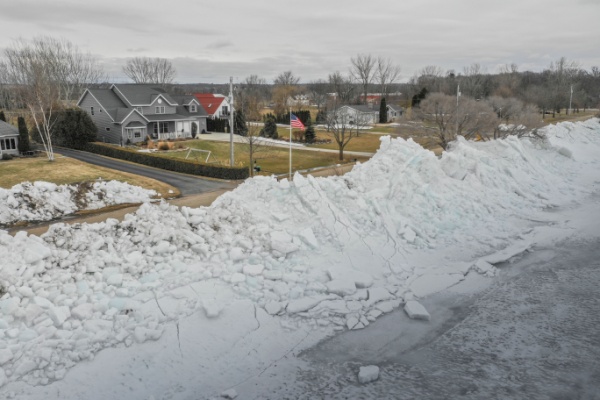
Residents around the Great Lakes were on notice Monday that a weather phenomenon known as an “ice shove” was possible throughout the night on the eastern shores as whiteout conditions were expected across the Northeast.
The Great Lakes are incredibly large bodies of water, used for shipping goods and ores around the world. Their shores are also home to many communities and several large cities sitting along the coast, so it’s important to be aware of how and when ice shoves can form.
What is an Ice Shove and How Does it Form?
Rare to most, but well known the people around the Great Lakes region, an ice shove is also known as an “ice seiche” or “ice tsunami,” and these events can pile huge chunks of ice onshore, damaging homes and closing roads.
Ice Shoves require three main factors to form: fluctuating warm temperatures, high sustained wind speeds, and a portion of large open water. Ice shoves occur when strong winds push large sheets of ice towards the shoreline, often happening during temperature fluctuations where the ice near the shore melts slightly, allowing it to move more freely.
The bigger the lake, the more force the wind can apply to push this heavy mass of ice toward shore. These ice masses can cause significant damage to waterfront structures like docks, piers, and even buildings by pushing them over or crushing them with their sheer weight.
The Difference Between an Ice Shove and an Ice Jam
Whereas an ice jam is caused by mounds of ice plugging up a waterway, flooding surrounding areas, ice shoves are large chunks of ice that are rapidly pushed on shore. The ice can pile to heights of almost forty feet!
When and Where are Ice Shoves More Likely to Occur?
These ice shoves are a dangerous phenomenon that can happen in the winter and springtime along the shores of the Great Lakes—or any large body of water, for that matter, such as Lake Winnipeg in Manitoba, Canada.
Another reason ice shoves are a hidden danger is because they can strike after sunset—meaning you, quite literally, would not see them coming. You may be able to hear them coming, however, as the breaking and movement of the ice can cause loud crashing, crackling, and booming sounds.
Ice shoves are rapid and unpredictable, moving at rates of up to several yards per minute. Being hit by the ice could severely injure a person, and any buildings struck could sustain significant damage. They have even been known to move vehicles!
Ice Shove Prevention – How to Protect Your Property and Yourself
To avoid the damage caused by an ice shove, the most effective method is to build a protective structure like a riprap wall which can help deflect and redirect the ice away from your property, as there’s no way to completely prevent the natural phenomenon of ice shoving; monitor weather conditions closely, particularly wind direction, and move any valuable waterfront equipment away from the shoreline when ice shove conditions are likely; and consider consulting with a shoreline management expert to assess your specific property and design the best protective measures.
- Shoreline reinforcement: Installing a riprap wall made of large rocks is the most common method to protect against ice shoves.
- Slope design: Creating a gradual slope on your shoreline can help the ice slide over it instead of pushing against it.
- Vegetation: Planting trees and shrubs near the shoreline can provide some natural protection, but may not be enough against large ice shoves.
- Weather forecasts: Pay close attention to wind direction and strength, especially during periods of thawing.
- Visual observation: Regularly check the ice conditions on the body of water near your property.
—
Photo Credit: Randy Kostichka / Shutterstock.com