As the government shutdown stalemate drags on, Americans are missing paychecks and as of November 1, SNAP benefits have run out, just as people need that assistance more than ever.
Last week, Food & Wine reported that 25 states are suing the Trump administration to compel it to release emergency funds to continue paying SNAP benefits to the more than 40 million Americans who rely on them each month. However, to date, the administration has refused, and even if the states win their case, it could be weeks before people get their back payments. That means many Americans — likely including your friends, neighbors, or even you — could go hungry.
Key SNAP statistics, according to the USDA
- Number of participants: In 2024, per the U.S. Department of Agriculture, SNAP averaged 41.7 million participants per month
- Cost: Federal SNAP spending totaled $99.8 billion
- Average benefit: $187.20 per participant per month
- Who uses it: In 2023, adults aged 18–59 accounted for the largest share of SNAP participants at 42%, followed by children at 39%, and adults aged 60 and older at 19%. White individuals are the largest racial group receiving SNAP benefits, at 35.4%
It’s critical to note that once the shutdown ends, missed payments will be reimbursed, and beneficiaries won’t permanently lose their benefits. However, this funding gap could cause significant hardship for millions of Americans.
As Food & Wine reports, there are also other ways for people to make ends meet without SNAP benefits. As Kelli Smith, the director of financial planning at Edelman Financial Engines, explained, it begins with knowing how to prepare for even leaner times.
“When budgets are tight or SNAP assistance is disrupted, every dollar counts. Planning meals in advance, choosing store brands, and using digital coupons or cashback apps can help families save without sacrificing nutrition,” Smith explained. “Even small adjustments like cooking in batches, freezing leftovers, or shopping store promotions can add up to meaningful savings over the course of a month.”
Community Resources Can Help Bridge the Gap… For Now
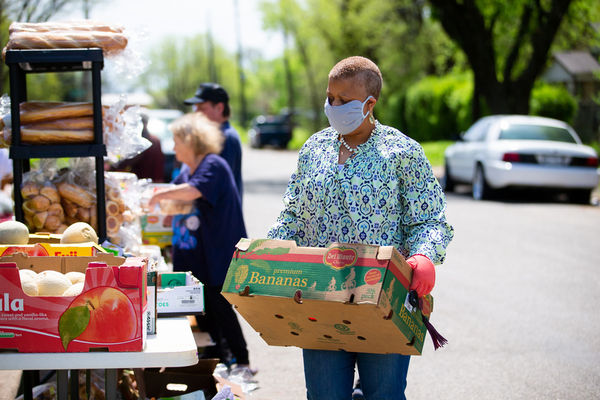
Smith also noted that community resources can help bridge the gap. “Local food banks and pantries usually step up quickly when there’s a disruption, offering essentials like produce, canned goods, and pantry staples. School meal programs can also be another lifeline.”
However, many of these services say they are already hitting their limits. “Food banks and local charities are already stretched thin and cannot replace SNAP, especially as demand for food assistance increases around the holidays. For every meal a food bank provides, SNAP provides nine,” shared Darcy Milburn, the director of social security and healthcare policy at The Arc of the United States, an organization that serves people with intellectual and developmental disabilities.
Milburn explained that this cutoff to funds will have a “disproportionate impact on people with disabilities: At least 10% of SNAP beneficiaries are adults with disabilities under the age of 65. SNAP also serves many low-income people who have disabilities but are not considered ‘disabled’ under SNAP’s rules, which use an extremely strict definition of disability.”
Even larger food banks, such as The Greater Boston Food Bank, which noted in its fifth annual statewide food access report that an estimated 2 million Massachusetts adults (more than one in three residents) faced food insecurity in 2024, are already overwhelmed by the challenge of combating even more hunger.
“SNAP is our nation’s best defense against hunger. There is no way our charitable food network here in Massachusetts can provide enough food to replace this essential program,” Catherine D’Amato, the president and CEO at The Greater Boston Food Bank, said. “It’s an impossible task both financially and logistically.” According to D’Amato, the four Massachusetts food banks would need to provide up to 56 million more meals in November alone to compensate for the shortfall in SNAP benefits. “That’s more than four times what the food bank system currently distributes in an average month.”
Giving to Food Banks is One Way People Can Help
But just because this all feels like an impossible hill to climb doesn’t mean that those who can should stop giving. “Hunger is not a problem that philanthropy alone can solve, but for those who are able and inclined to provide financial support, giving to food banks is one way people can help,” D’Amato said. “The purchasing power of food banks enables us to acquire healthy food at deep discounts and distribute this food through our network of food pantries and other food assistance providers.”
Smith emphasized that those seeking help should also consider turning to community and faith-based groups, such as churches and neighborhood centers, which often host free meal events or offer grocery vouchers. “The best thing you can do is check what’s available in your area now, before you’re in a pinch, so you know exactly where to turn if benefits are delayed.”
Poverty isn’t something experienced by a few or in isolation. As Confronting Poverty explained, 60% of Americans will experience at least “one year below the official poverty line,” and three-quarters of Americans will face poverty or near poverty. That means it — and the food insecurity that comes with it — are issues for everyone. However, if you have the means, Jaime said the simplest way to address it is with empathy and a little helping hand. As she said, “If you have food and you have access to food, just invite your neighbor over for a meal.”
Ways to Find and Give Help
Try alternative discount services like Flashfood: Flashfood is an affordable grocery app that partners with grocery stores to sell their surplus food at a discount. They’re available in more than 2,000 grocery stores across North America and offer fresh food — including produce, meat, and dairy — at 50% off or more.
Give to — or receive help from — food banks: As the Greater Boston Food Bank explained, it has 600 food distribution partners that will continue to “do everything we can to provide as much healthy food as possible to our neighbors in this time of great need.” Use Feeding America’s Food Bank Finder to locate the closest one to you, which you can also donate to directly.
Give to national nonprofits: There are many national nonprofits, including Feeding America and No Kid Hungry, that assist at the national, state, and local community levels. Sarah Steely, the director at No Kid Hungry Virginia, told Food & Wine that people can and should explore programs like Virginia Fresh Match, which lets individuals double the value of SNAP benefits used for fruits and vegetables. (Virginia residents can get direct assistance by texting CONNECT to 247211.)
Check local nonprofits like City Harvest: According to City Harvest CEO Jilly Stephens, the organization has been distributing food at Fort Wadsworth on Staten Island, Fort Hamilton in Brooklyn, and near LaGuardia and JFK airports to support federal workers affected by the shutdown. It is now working to expand distributions to its food pantry partners in areas with high numbers of SNAP recipients. “As the government shutdown continues, even more of our fellow New Yorkers could find themselves in need of food assistance. No matter what happens in the weeks to come, City Harvest is committed to being here, rescuing and delivering as much food as we can for anyone in our city who needs it.”
Find local free markets: Urban Gleaners operates 21 public free food markets open to anyone. The team shared that since the start of the Trump administration, their market attendance has increased significantly, and they expect a substantial rise after this weekend. They noted in a statement shared with Food & Wine, “One of the tenets core to our mission — that food access is as barrier-free as possible for those dealing with food insecurity — will continue to be a guiding light as we face this winter without SNAP access.”
Get additional assistance: Need more help? Call the USDA National Hunger Hotline at 1-866-3-HUNGRY or 1-877-8-HAMBRE, or text “FOOD” to 914-342-7744.
—
Photo Credit: Sara Carpenter / Shutterstock.com