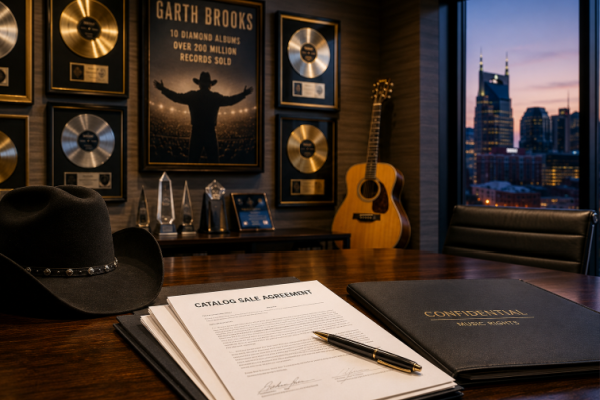
The music industry could be on the verge of witnessing one of its biggest catalog transactions ever.
Reports indicate that country music icon Garth Brooks is exploring a potential sale of the rights to his music, with estimates placing the value of the deal at anywhere from more than $1 billion to as much as $2 billion. If completed at the upper end of that range, the transaction would set a new benchmark for artist catalog sales and further highlight the growing appetite investors have for proven music assets.
The proposed package would reportedly include both Brooks’ songwriting interests and his master recordings, giving a buyer access to one of the most commercially successful catalogs in modern music history.
Brooks remains a unique figure in the business. While many major artists have embraced every available streaming platform, he has spent decades carefully controlling how and where fans can access his music. That strategy has helped preserve the value and exclusivity of a catalog built on some of country music’s most recognizable songs.
The timing is noteworthy. Music rights have become one of the hottest investment categories in entertainment, with buyers willing to spend enormous sums for catalogs that continue generating revenue through streaming, licensing, radio airplay, and other uses. Brooks represents one of the few superstar artists who still retains significant control over his catalog, making any potential sale especially attractive to investors.
Beyond the business headlines, the reported valuation serves as another reminder of Brooks’ extraordinary impact on country music. With more than 200 million albums sold in the United States and a record-setting collection of diamond-certified releases, his commercial achievements remain unmatched by most artists in any genre.
For now, discussions appear to remain exploratory, and there is no indication that a deal has been completed. Still, the possibility of a catalog sale worth up to $2 billion has already sparked conversation across the music industry, where Brooks’ next move could reshape expectations for the value of country music’s most powerful catalogs.
