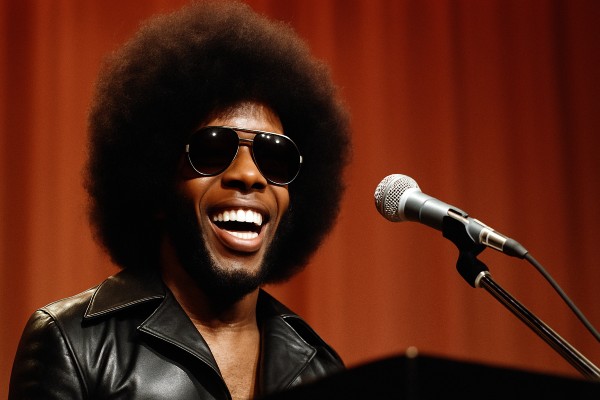
Sly Stone, the electric soul at the center of Sly and the Family Stone, passed away at 82, closing the final chapter on one of music’s most dazzling, volatile, and influential careers. A genre-bending pioneer, Stone crafted a kaleidoscope of funk, soul, and psychedelic rock that not only defined the late 1960s and early 1970s but permanently rewired the DNA of American popular music.
Born Sylvester Stewart in Denton, Texas, and raised in Vallejo, California, Sly was a musical prodigy from childhood. He evolved into a hit-producing DJ and then a bandleader who believed in unity—with a groundbreaking group of Black and white men and women that embodied the multicultural dream of the era.
His band, Sly and the Family Stone, was a whirlwind of horns, harmonies, and hard truths. With songs like “Dance to the Music,” “Stand!” and the anthem “Everyday People,” the group urged listeners to believe in equality with catchy grooves and razor-sharp lyrics. Their Woodstock performance was legendary, and their fashion and sound set trends that rippled through Motown, jazz, rock, and hip-hop.
But as the ’60s dream decayed, so did Sly’s world. Pressured by fame, fractured by addiction, and haunted by racial and political discord, his descent mirrored the disillusionment of the era. Albums like There’s a Riot Goin’ On captured that chaos—brilliant, but bleak.
Though he released few albums after the early ’80s, Stone remained a looming influence. Artists from George Clinton to the Beastie Boys and Maroon 5 carried his torch. A 2023 memoir, Thank You (Falettinme Be Mice Elf Agin), and a 2025 Questlove documentary, Sly Lives!, rekindled his legend.
Sly Stone didn’t just play music—he made statements. He changed how bands looked, how funk sounded, and how generations felt. Now, as his final note fades, the beat he started still pulses through every rebellious riff and soulful sample that dares to be different.