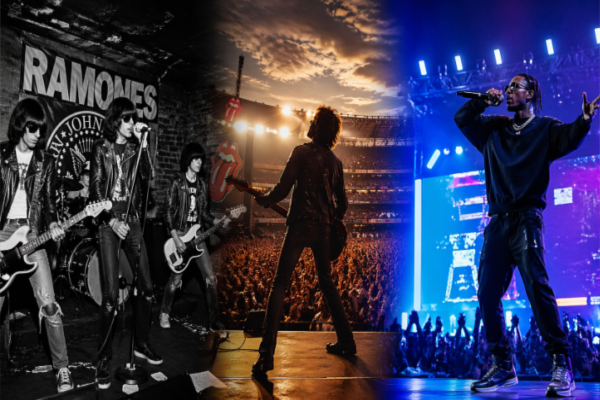
April 23 stands as one of those rare dates where music history refuses to stay in a single lane. From the gritty beginnings of punk to polished chart-toppers and modern hip-hop dominance, the day captures the industry’s constant evolution.
The mid-1960s helped set the tone. The Rolling Stones kicked off a major North American tour in 1965, reinforcing their growing influence across the Atlantic. Just a few years later, The Beatles added their own chapter when “Get Back” climbed to the top of the UK charts, marking yet another moment of global dominance for the band.
By the early 1970s, April 23 became tied to one of rock’s defining releases. The Rolling Stones unveiled Sticky Fingers in 1971, a project that not only topped charts worldwide but also signaled a new level of creative control for the band. That same spirit of disruption would reappear just five years later when the Ramones released their self-titled debut. Recorded quickly and cheaply, the album would go on to shape punk rock for decades, proving that influence is not always tied to immediate commercial success.
The momentum continued into the late 1970s and 1980s, where chart success took center stage. Thelma Houston reached the top of the Billboard Hot 100, while Dexys Midnight Runners delivered one of the decade’s most recognizable hits with “Come On Eileen.” Across the Atlantic, albums and singles continued to redefine what mainstream success looked like.
April 23 also bridges into the modern era. From Kanye West’s chart-topping releases in the 2010s to Jack Harlow’s dominance in the 2020s, the date remains relevant in today’s music landscape. It serves as a reminder that while styles change, the drive to innovate and connect with audiences remains constant.
Beyond releases and rankings, the day carries personal significance as well. It marks the birth of Roy Orbison, whose haunting voice and emotional delivery left a lasting imprint on rock and pop music.
Taken together, April 23 is less about a single defining moment and more about a collection of milestones that span genres, decades, and cultural shifts. It is a snapshot of music’s ability to reinvent itself while still echoing its past.
