Dolly Parton spent more than six decades proving that a country singer from the mountains of East Tennessee could become something much bigger than a music star.
Parton, who died at age 80, leaves behind a career that stretched across country, pop, film, television, business and philanthropy. Along the way, she became one of the rare entertainers recognizable across generations, even to people who might struggle to name another country artist.
Her songs did much of the heavy lifting.
“Jolene,” “Coat of Many Colors,” “9 to 5” and “I Will Always Love You” became defining pieces of an enormous catalog built around Parton’s gift for turning personal experiences and everyday emotions into deceptively simple songs.
She could write about heartbreak without sounding defeated, poverty without asking for pity and ambition without losing her sense of humor.
That ability was rooted in her upbringing.
Born in Tennessee in 1946, Parton was one of 12 children in a family with little money. She began singing in church, learned guitar and started writing songs while still young. Almost immediately after graduating from high school, she headed to Nashville in 1964 determined to make music her life.
She initially found opportunities as a songwriter before gaining wider attention as a performer. Her professional partnership with Porter Wagoner brought her into homes across America and helped establish her as a country star.
Eventually, Parton was ready to build a career on her own terms.
Her departure from Wagoner’s show inspired “I Will Always Love You,” a song that became a hit for Parton before achieving another life decades later through Whitney Houston’s blockbuster recording for “The Bodyguard.”
It was an extraordinary example of Parton’s songwriting reach. The voice singing the song could change, the musical arrangement could change and the audience could change, but the emotional core remained unmistakable.
Parton proved equally comfortable stepping outside country music.
“9 to 5” became both a signature song and part of her successful move into Hollywood. Her film career included memorable roles in “9 to 5” and “Steel Magnolias,” helping turn an already successful recording artist into a mainstream entertainment fixture.
Then there was the image.
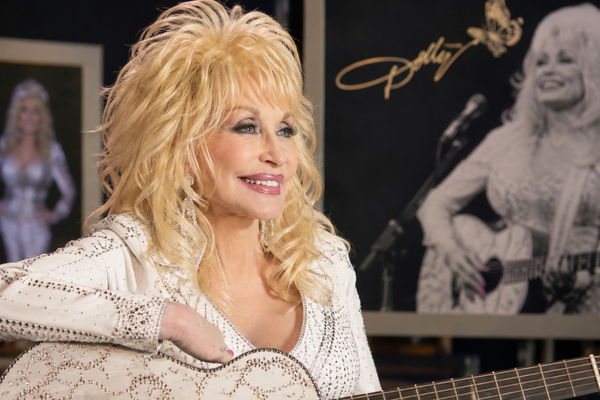
The towering blonde hair, sparkling outfits, rhinestones and unapologetic glamour made Parton instantly recognizable. She also understood the joke better than anyone and frequently used humor about her appearance to disarm audiences.
But the carefully cultivated image could sometimes obscure just how shrewd she was about her career.
Parton maintained a strong sense of ownership over her work and identity, building a business empire while protecting the qualities that made her distinctive. She managed the difficult trick of becoming a global celebrity without appearing disconnected from the Tennessee roots that shaped her.
Her legacy also extends beyond records, movies and concert stages.
Through the Imagination Library, Parton turned her concern for children’s literacy into an international program that has provided books to young readers and their families. The project became one of the defining accomplishments of her philanthropic life.
Her later years included profound personal loss. Carl Dean, her husband of nearly 60 years, died in March 2025.
Parton also dealt with health problems during the final period of her life, but continued working and remained focused on projects she hoped to complete. Her team said she died following a brief battle with cancer, though the specific type was not publicly disclosed.
For an artist whose appearance was deliberately larger than life, Parton’s greatest strength may have been her ability to make her work feel remarkably human.
She wrote about family, love, jealousy, work, heartbreak, hardship and hope. She could make audiences laugh at one moment and leave them devastated by a few carefully chosen lyrics the next.
The awards, hit records and movie roles document an extraordinary career. They do not entirely explain why Dolly Parton mattered.
That answer is found in the songs, in generations of artists influenced by her writing, in children receiving books through a program carrying her name, and in an entertainment career built without surrendering the personality that started it all.
The rhinestones made Dolly Parton impossible to miss.
The songwriting made her impossible to forget.
