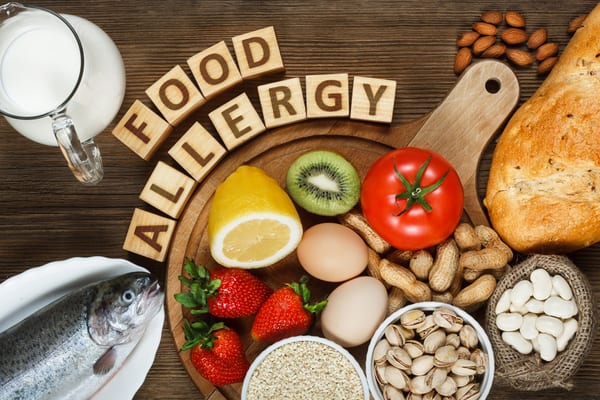
The number of young people with food allergies has been surging in the past few decades. This fall, many of them are heading to college. Living with a food allergy at home is challenging under the best of circumstances. But college students say navigating food allergies on campus is particularly fraught.
As The Washington Post reports, the prevalence and severity of food allergies among children increased 50 percent between 1997 and 2011, according to the nonprofit organization Food Allergy Research & Education (FARE). Now, at least 1 in 10 adults in the United States have food allergies, according to data published in JAMA Network in 2019. Some researchers have described the surge as a “food allergy epidemic.”
“They’re all growing up and taking their food allergies into college,” said Ruchi Gupta, a physician and the founding director of the Center for Food Allergy and Asthma Research (CFAAR) at Northwestern Medicine. “We’re talking about 10 percent of a college population learning how to be independent for the first time, making food choices on their own, and that coinciding with wanting to be accepted, make friends, eat out and go to parties.”
The true scope of the problem is unknown, Gupta said, partly because college students are not required to declare their food allergies on applications. It is even harder to quantify how many of them experience anaphylaxis — a life-threatening allergic reaction — while on campus.
A 2016 study described a nearly threefold increase in emergency department visits related to food-induced anaphylaxis among 5- to 17-year-olds from 2005 to 2014. “What we do know is that about one in five kids and one in 10 adults end up in the emergency room every year for a food allergic reaction,” Gupta said. “And we definitely think it’s higher for college students and young adults at that age.”
Many aspects of the college experience involve food, including welcome buffets during orientation week and dorm gatherings. Parties are among the riskiest environments, Gupta said. And for those with food allergies, social events and other outings introduce myriad other risks.
Some college dining halls have dedicated stations that are free of nine common allergenic foods: peanuts, tree nuts, milk, egg, wheat, soy, fish, shellfish and sesame. (These foods are responsible for 90 percent of all food allergy reactions, according to FAACT.)
But despite precautions, mistakes do occur, a number of anecdotal reports indicate. In one study, students told researchers that they had eaten food that was mislabeled or that they had received the wrong meals in dining rooms. Additionally, some say that campus dining room workers are inadequately trained to understand food allergies.
But many people with allergies say the biggest challenge is a general lack of support and understanding among peers.
Food Allergy Research & Education (FARE) and Food Allergy & Anaphylaxis Connection Team (FAACT) have launched programs to raise allergy awareness among university staffers and in resource centers. They also provide college students with checklists, legal help and other food allergy information.
An app called Spokin recently released a “Top 100” allergy-friendly college ranking based on over 300 student reviews so far. Next month, the app will offer more detailed information about the food allergy policies and practices at various colleges. Participating schools will pay a fee to be included.
“The goal is to make the already daunting school research process far easier,” said Spokin founder and chief executive Susie Hultquist, who also is the mother of a college student with food allergies.
—
Photo Credit: Evan Lorne / Shutterstock.com