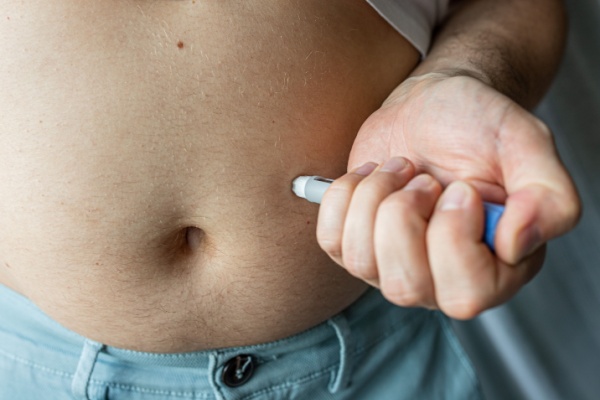
About one in eight American adults say they’ve used a GLP-1 receptor agonist medication like Ozempic or Wegovy at some point, making this a very popular drug class. While these drugs can be used to treat type 2 diabetes, they’ve really taken off for their weight loss potential—this probably isn’t news to you. And now that the FDA has approved the medication for weight loss, we an expect those numbers to rise even more.
But as SELF magazine reports, there seems to be a wave of people who struggle to stop using these medications once they start. Model and reality star Brooks Nader has spoken openly about what she calls her “addiction” to using GLP-1s. In a September 2025 episode of her show, Love Thy Nader, the 28-year-old’s sisters stage an intervention over her use of GLP-1 medication and eating habits after they found her nearly unconscious in the bathtub. (Her sisters shared at the time that Nader was mostly consuming bone broth.)
“The thing that I was so shocked about with the show was that I had so many people reach out to me saying, ‘I’m also addicted to GLP-1. I’m ashamed to talk about it because there’s such a stigma around it. It’s a crutch for me,’” Nader later told Bustle. But she also told the magazine that she’s still taking the medication, adding, “it’s a crutch for me too. It’s not healthy. I should get off it; I’ll be honest about that.”
Nader recently told Us Weekly that she’s heard from many people who have had the similar experiences. “I’ve had moms come up to me, I’ve had girls in college come up to me and have similar struggles,” she said. “And I’m hoping that through using my voice, we can all band together and find a solution.”
Weight loss is a complicated topic that often has deep emotional undercurrents, making it understandable that some people may feel dependent on these medications after reaching their goal weight, Thea Gallagher, PsyD, clinical associate professor at NYU Langone Health and cohost of the Mind in View podcast, tells SELF. Here’s why medical professionals say people may feel hooked on these drugs, plus what a physician who prescribes these medications recommends doing once you hit your goal weight.
People don’t get addicted to these medications, but they can become emotionally reliant on them.
This is a slightly complicated thing to explain, so bear with us for a moment here. An addiction can be physiological, which means it alters your body in a way that attempting to stop or cut down can cause a physical withdrawal, Gail Saltz, MD, associate professor of psychiatry at the NY Presbyterian Hospital Weill-Cornell School of Medicine, tells SELF. “These are drugs with addiction potential such as heroin, cocaine, opioids, alcohol, even nicotine,” she says.” The sudden removal of the drug causes physical withdrawal.”
But “addiction” can also be used to talk about a behavior that gives a person a good feeling, Dr. Saltz explains. This behavior usually stimulates the dopamine reward center of the brain, and stopping it makes you feel sad, mad, or miserable, creating an “intense longing” to keep up the behavior, she says. “Gambling, sex, cheating, shopping are behaviors that may feel psychologically addictive to some,” Dr. Saltz says.
So, where does a medication like a GLP-1 fall in here?
It’s not an addiction, but it’s understandable that, for some, it might feel like one. “The desire to lose weight, to be thin, to turn off the noise of hunger in your mind, to be admired for your body—these feelings can feel intense, highly desired and the fear of not having them can drive someone to do things that may not be good for them,” Dr. Saltz says. “It can be hard to parse out feeling psychologically consumed with wanting to take a GLP-1 receptor agonist from what is actually an eating disorder.”
There is no data around these medications that would suggest that someone can be physiologically addicted to these medications, Jamie K. Alan, PhD, an associate professor of pharmacology and toxicology at Michigan State University, tells SELF. But Dr. Alan points out that “wanting and needing the medication to look or feel a certain way can be very real.” (Dr. Alan also notes that some research has shown that these medications may help people who are struggling with alcohol use disorder and opioid use disorder, which seemingly contradicts those addiction claims.)
It’s that struggle with eating and the fear of regaining weight that can make someone feel that they can’t go off GLP-1 medications, Dr. Saltz says. “This may be due to a true eating disorder or it may be due to an intense conflict about eating, hunger, and body image, which is so compelling that despite it being medically advisable to stop the GLP-1, they feel they can’t do it and can lead someone to feel psychologically addicted,” Dr. Saltz says.
Unfortunately, those concerns about weight regain are legitimate. One study of 327 adults who were followed after a clinical trial found that people who stopped taking semaglutide (Wegovy, Ozempic) regained two thirds of their previous weight within a year of stopping the medication.
“Some people are very fearful of that,” Mir Ali, MD, bariatric surgeon and medical director of MemorialCare Surgical Weight Loss Center at Orange Coast Medical Center in Fountain Valley, California, tells SELF. “They’re very happy with the results and very worried about regaining the weight. We see that in our practice.”
There are ways to transition off these medications, or to a manageable dose.
It’s important to focus on your diet, lifestyle, and activity levels on your weight loss journey, according to Dr. Ali. “The goal of the medication is to help you develop healthier habits,” he says. Dr. Gallagher also says it’s important to “reintegrate your relationship with food and what’s healthy” while you lose weight.
Once people reach their goal weight, they may choose to taper the medication to take it every other week or every three weeks or they may go to a lower “maintenance” dose, Dr. Ali says. “If they go off the medication all of the sudden, they may see cravings return,” he says. (However, Dr. Ali says it’s possible to lose the weight and keep it off after stopping a GLP-1 medication; it’s just that diet and lifestyle habits need to change first.)
But Dr. Ali stresses that there’s a reason why these medications were designed to treat obesity and overweight, and not to help people lose a few pounds. “Obesity is a long-term medical condition, just like diabetes or high blood pressure,” he says. “That may require a long-term medication to manage it.”
If you’ve lost weight on one of these medications and you’re scared to go off it, despite your doctor giving you the okay, Dr. Gallagher recommends meeting with a mental health professional. They can help you work through your concerns and where they’re coming from, she says.
Ultimately, Dr. Ali stresses the importance of working closely with your healthcare provider while taking a GLP-1 medication—and if you’re interested in coming off of it. But Dr. Gallagher says it’s also important to stay in tune with your emotional health during this time too. “There is a lot of energy out there now about shape and losing weight,” she says. “We have to be careful that we’re not using these medications for the wrong reasons.”
A representative for Novo Nordisk, which makes popular GLP-1 semaglutide medications Wegovy and Ozempic, declined to directly address the addiction claims. However, they shared this statement to SELF: “Semaglutide’s efficacy and safety have been extensively demonstrated in people with obesity/overweight with robust evidence for improving health outcomes. We remain committed to patient safety and transparency by maintaining up-to-date safety information and collaborating closely with health authorities and regulatory bodies worldwide.”
A spokesperson for Lilly, the maker of dual agonist drugs Zepbound and Mounjaro, which target both GIP and GLP-1 receptors, sent this statement to SELF: “Many people living with obesity experience weight-related stigma—and unfortunately, this stigma is often perpetuated by the media. Mounjaro and Zepbound (tirzepatide) are indicated for the treatment of serious chronic diseases. They are not approved for, and should not be used for, cosmetic weight loss.”
—
Photo Credit: myskin / Shutterstock.com