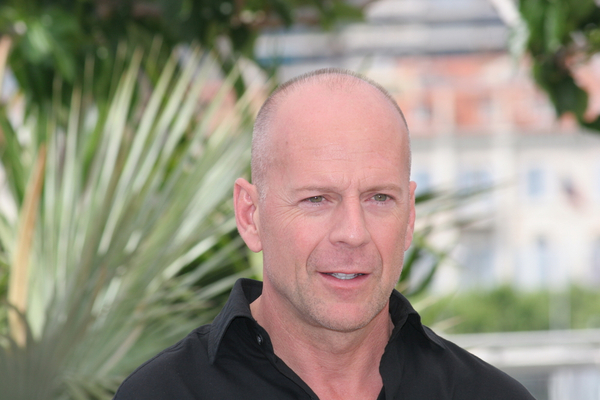
The family of Bruce Willis has announced that the actor has been diagnosed with a form of dementia called frontotemporal dementia, or FTD for short. In a statement shared last week, the 67-year-old star’s family stated that while the news “is painful, it is a relief to finally have a clear diagnosis.”
“Today there are no treatments for the disease, a reality that we hope can change in the years ahead. As Bruce’s condition advances, we hope that any media attention can be focused on shining a light on this disease that needs far more awareness and research,” the statement said.
As CNN reports, Willis’ family — including wife Emma Heming Willis, ex-wife Demi Moore and his daughters — first disclosed his diagnosis of aphasia back in 2022. They said at the time that Willis was suffering from a medical condition that was affecting his cognitive abilities and would be taking a break from acting.
“Bruce always believed in using his voice in the world to help others, and to raise awareness about important issues both publicly and privately,” his family’s new statement said. “We know in our hearts that – if he could today – he would want to respond by bringing global attention and a connectedness with those who are also dealing with this debilitating disease and how it impacts so many individuals and their families.”
Approximately five to 10 per cent of all dementia cases are FTD, according to the Alzheimer Society of Canada, but it makes up about 20 per cent of all young onset dementia diagnosed in those under 65. “It’s not an uncommon diagnosis, but it is one of the rare forms of dementia,” said Cathy Barrick, chief executive officer at the Alzheimer Society in Ontario, Canada.
According to the Mayo Clinic, Frontotemporal Dementia is an umbrella term for a group of brain disorders that primarily affect the frontal and temporal lobes of the brain. These areas of the brain are generally associated with personality, behavior and language.
In frontotemporal dementia, portions of these lobes shrink (atrophy). Signs and symptoms vary, depending on which part of the brain is affected. Some people with FTD have dramatic changes in their personalities and become socially inappropriate, impulsive or emotionally indifferent, while others lose the ability to use language properly.
Frontotemporal dementia can be misdiagnosed as a psychiatric problem or as Alzheimer’s disease, but FTD tends to occur at a younger age – between the ages of 40 and 65, which is what makes Willis’ diagnosis unusual. However, it can occur later in life as well. FTD is the cause of approximately 10% to 20% of dementia cases.
“The progression of the disease can be anywhere from two years to 20 years… so there’s a lot of variation in how people experience it,” said Dr. Joshua Armsrong, research scientist at the Alzheimer Society of Canada. Clusters of symptom types tend to occur together, and people may have more than one cluster of symptom types.
Signs and Symptoms
The most common signs of frontotemporal dementia involve extreme changes in behavior and personality. These include:
- Increasingly inappropriate social behavior
- Loss of empathy and other interpersonal skills, such as having sensitivity to another’s feelings
- Lack of judgment
- Loss of inhibition
- Lack of interest (apathy), which can be mistaken for depression
- Repetitive compulsive behavior, such as tapping, clapping or smacking lips
- A decline in personal hygiene
- Changes in eating habits, usually overeating or developing a preference for sweets and carbohydrates
- Eating inedible objects
- Compulsively wanting to put things in the mouth
Speech and language problems
Some subtypes of frontotemporal dementia lead to language problems or impairment or loss of speech. Primary progressive aphasia, semantic dementia and progressive agrammatic (nonfluent) aphasia are all considered to be frontotemporal dementia.
Problems caused by these conditions include:
- Increasing difficulty in using and understanding written and spoken language, such as having trouble finding the right word to use in speech or naming objects
- Trouble naming things, possibly replacing a specific word with a more general word such as “it” for pen
- No longer knowing word meanings
- Having hesitant speech that may sound telegraphic
- Making mistakes in sentence construction
Motor disorders
Rarer subtypes of frontotemporal dementia are characterized by problems with movement similar to those associated with Parkinson’s disease or amyotrophic lateral sclerosis (ALS).
Motor-related problems may include:
- Tremor
- Rigidity
- Muscle spasms or twitches
- Poor coordination
- Difficulty swallowing
- Muscle weakness
- Inappropriate laughing or crying
- Falls or walking problems
“Bruce Willis is in his prime… And we do see this kind of diagnosis in the earlier years as opposed to other types of dementia which tend to happen. Age is the biggest risk factor, but not for this particular type,” Barrick told Global News.
Raising Awareness is Key
Raising awareness about FTD is critical to reducing stigma and bringing attention to the importance of investing in more research to better understand it, according to both Barrick and Armstrong. A lot of people may shy away from reaching out for help or a diagnosis because of fear or because of the stigma around mental health, said Armstrong. But with Bruce Willis sharing his story, more people will know that this disease exists and what the symptoms might be, he added.
Barrick agreed. “It will help people (to) start talking about it… others who are following in this path can benefit from the increased awareness and research… So it’s a very sad story, but he (Bruce Willis) is doing a really incredible thing by sharing it with the world,” Barrick said.
“Bruce has always found joy in life – and has helped everyone he knows to do the same. It has meant the world to see that sense of care echoed back to him and to all of us,” the family said via their statement. “We have been so moved by the love you have all shared for our dear husband, father, and friend during this difficult time. Your continued compassion, understanding, and respect will enable us to help Bruce live as full a life as possible.”
—
Photo Credit: Denis Makarenko / Shutterstock.com