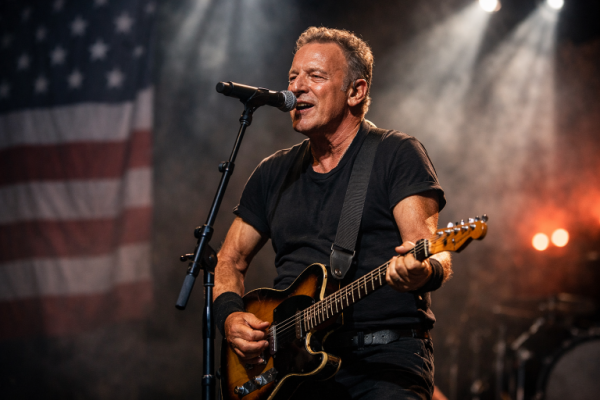
Bruce Springsteen is not interested in nostalgia for its own sake. As he revisits the legacy of Born in the U.S.A., he is instead drawing a direct line between the themes that defined the album in the 1980s and the realities facing America today.
At the time of its release, Born in the U.S.A. became one of the most recognizable records in popular music, propelled by arena-sized hooks and a title track that many listeners took at face value. But beneath its anthemic surface, the album told a far more complicated story about working-class Americans, disillusionment, and the cost of blind patriotism. Decades later, Springsteen is once again underscoring that message, insisting it remains as relevant as ever.
Now in his seventies, Springsteen continues to position himself not just as a performer, but as a voice engaged in the national conversation. His support for organizations like the American Civil Liberties Union reflects a broader commitment to civil rights and democratic values. For him, music and citizenship are not separate pursuits. They are deeply intertwined.
Springsteen has long been vocal about the responsibility that comes with influence. In today’s climate, he sees that responsibility as even more urgent. The same concerns that shaped Born in the U.S.A., including economic inequality, the struggles of veterans, and the gap between national identity and lived experience, have not faded. If anything, they have intensified.
Part of the challenge, he acknowledges, is correcting the narrative around his most famous work. The title track in particular has often been misinterpreted as a straightforward celebration of America. In reality, it was written as a critique, a reflection of frustration and unmet promises. That tension between perception and intention continues to follow the song, making it a focal point in discussions about how art is received and repurposed.
Despite the decades that have passed, Springsteen shows no signs of stepping away from these conversations. His music remains a vehicle for examining the country’s contradictions, while his public stance reinforces his belief in active participation and accountability.
For an artist whose career has already spanned generations, the enduring relevance of his work speaks to something deeper than longevity. It points to a consistent willingness to confront uncomfortable truths, even when they are wrapped in the sound of a stadium anthem.