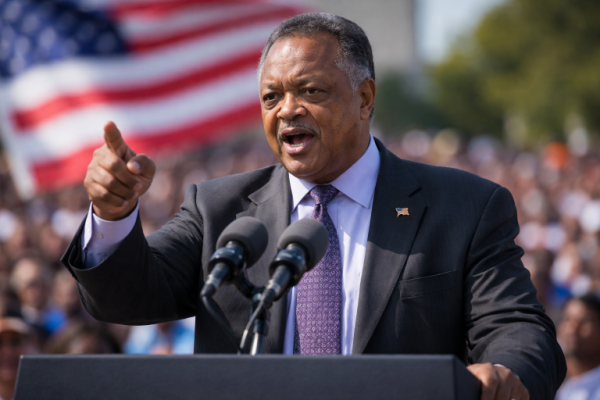
Rev. Jesse Jackson, a defining voice of the modern civil rights movement and a relentless advocate for social justice, has died at the age of 84, closing a chapter on more than six decades of activism that reshaped American political and cultural life.
A Baptist minister who rose to prominence alongside Dr. Martin Luther King Jr., Jackson became one of the most recognizable and enduring figures of the post-1960s civil rights era. He was present in Memphis in April 1968 when King was assassinated, a moment that profoundly influenced his life and mission. In the years that followed, Jackson emerged as a national leader determined to carry forward the movement’s unfinished work.
Through organizations such as Operation PUSH and later the Rainbow PUSH Coalition, Jackson championed economic opportunity, voting rights, educational access, and health equity. He pressed corporations and government leaders to diversify hiring practices and expand access to resources for marginalized communities. His advocacy extended beyond America’s borders, where he engaged in diplomatic efforts and human rights initiatives.
Jackson also broke barriers in electoral politics. His campaigns for the Democratic presidential nomination in 1984 and 1988 were historic, galvanizing millions of voters and broadening participation within the party’s base. By building what he called a “Rainbow Coalition,” he sought to unite African Americans, Latinos, labor groups, farmers, and other underserved communities into a formidable political force. Though he did not secure the nomination, his campaigns reshaped the national conversation and paved the way for future generations of diverse political leadership.
In recent years, Jackson faced significant health challenges, including a diagnosis of progressive supranuclear palsy, a rare neurological disorder that affects movement, balance, and speech. Despite his declining health, his legacy as an orator, organizer, and advocate remained firmly intact.
Tributes from across the political spectrum and around the world have highlighted Jackson’s moral clarity and his unyielding belief in the power of collective action. Supporters credit him with expanding the boundaries of political participation and giving voice to communities long excluded from the corridors of power.
From the front lines of the civil rights movement to presidential campaign stages and global diplomatic missions, Jesse Jackson’s life was defined by his conviction that justice requires persistence. His passing marks the loss of a historic figure whose influence will continue to shape public life for generations.