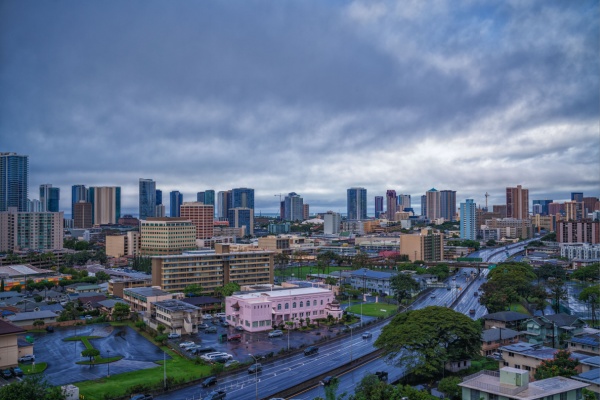
Oahu is experiencing the worst flooding Hawaii has seen in over 20 years, with damage estimates exceeding $1 billion as homes, roads, schools, airports and a Maui hospital have been impacted.
As The Weather Channel reports, more than 230 people have been rescued, including 72 children and adults airlifted by the National Guard and Honolulu Fire Department from a spring break youth camp. About 5,500 people remain under evacuation orders.
Parts of Oahu have already received more than 8 inches of rain, with forecasters warning several more inches are expected this weekend on already saturated ground.
Property Loss Predicted at Over $1 Billion
Residents deluged with catastrophic flooding of homes, schools, roads, airports, and at least one hospital are just beginning to assess the damage. As Realtor.com reports, Hawaii’s governor Josh Green states the property loss is predicted to top $1 billion.
While no deaths have yet been reported in what experts are calling the worst flooding since 2004, hundreds of people reportedly had to be rescued by the National Guard, thousands lost power, and at least 5,000 people on Oahu’s North Shore were evacuated.
Kona Lows
Six of Hawaii’s main islands—Oahu, Maui, Molokai, Lanai, Kahoolawe, and the Big Island—went under flash flood warnings as a series of rainstorms called “Kona lows” swept through the islands starting on March 10.
“In some places in our state, we’ve had between 40 and 50 inches of rain,” Gov. Josh Green said in a video posted to X on March 21. “Don’t take this storm lightly,” he said. “Aloha, and thanks for taking care of each other.”
As of early morning March 25, Hawaii County is the only area still under a flood watch. FEMA teams are on the ground assessing damage, the Hawaii Emergency Management Agency said on X. While evacuation orders for Oahu have been lifted, there are still water conservation and water boiling warnings for certain areas.
Neighbors Helping Neighbors
Residents in Waialua on the north end weren’t happy Tuesday night as they vented their frustrations about what they said was the island’s too-slow emergency response. “Can I just have an apology from all of law enforcement and everybody, one man at a time?” a local man was seen demanding in video captured by Hawaii News Now. But Honolulu Mayor Rick Blangiardi defended the city’s response saying, “We’re throwing everything at this we can. We’re getting better by the day because there is so much to learn.”
In Manoa and Palolo, neighbors and city agencies got out and began cleaning up. “What we saw was like nothing I’d ever seen,” one resident told KHON2. Other neighbors set up tables of donations of food, clothes, and cleaning products for anyone who wanted them. “Just drive in and take what you need, no questions asked,” said a volunteer. “This is the good thing about Hawaii,” said a resident. “We come together, we help our neighbors. That’s the key to the Aloha spirit.”
“Aquaman” and “Game of Thrones” actor Jason Momoa, a Hawaii native who lives on the North Shore, has posted a series of Instagram videos showing not only destruction to the area but neighbors helping neighbors, handing out food and water. “Aloha everyone, These past weeks have been heavy,” he wrote. “The storms, the flooding, the constant rain across Oʻahu have affected so many of our people especially those already facing hardship. Seeing families displaced, communities struggling, and our unhoused neighbors hit the hardest. …”
Watching the Dam and Concern about Impact on Farmers
The 120-year-old Wahiawa dam on the north end of Honolulu—an area hit particularly hard—was being watched for signs of failure, but has so far held, said the governor. The dam, owned by Dole, a leading producer of fruit and vegetables that has a large pineapple farm on the North Shore of Oahu, said in a statement that it was carefully monitoring the dam, which so far had no signs of damage.
Many farms in the state—famous for pineapples, macadamia nuts, papaya, and Kona coffee—were decimated, resulting in at least $11 million worth of damage, according to Honolulu Civil Beat. The outlet says most farmers do not have insurance because they can’t afford it. Hawaii has 6,500 small farms producing all kinds of crops, and many are completely wiped out.
The Hawaii Department of Agriculture and Biosecurity recently announced a relief program for farmers. “Farms, ranches, and businesses may apply to receive a one-time grant of $1,500 to address immediate needs resulting from the storm,” the agency said in a press release.
Where to Get Help
Gov. Green said on X that a program had been established for people displaced by the storm to stay at hotels for a much reduced rate. Participating hotels—including well-known chains such as Hilton, Hyatt, and Sheraton—can be found here and those in need can call them directly for reservations.
People anywhere in the state can also call 2-1-1 for resources. Those who need assistance rescuing pets can contact the Hawaiian Humane Society.
Additionally, the Hawaii Department of Commerce and Consumer Affairs Insurance Division has launched a guide to help residents navigate flood insurance, including an instructional video on how to file a claim. Flood insurance is separate from regular homeowners’ insurance, and as it generally isn’t required unless you live in a high risk flood zone, many may not be covered.
More information on various resources can be found on the state’s emergency management agency site.
On March 23, Gov. Green sent a four-page letter to President Donald Trump, asking for disaster relief and delineating damage to public infrastructure, with a $1 billion damage estimation. Asked by Honolulu Civil Beat whether he was concerned about “Trump’s history of denying requests from Democratic governors,” Green reportedly replied that “divisive narratives” wouldn’t help the situation.
So far, the president has not acknowledged the flooding in the state.
—
Photo Credit: Theodore Trimmer / Shutterstock.com