The 2026 NFL trade deadline has come and gone, but some of the most intriguing storylines involve the deals that never materialized.
As teams prepared for the second half of the season, the New York Giants, Los Angeles Rams and Green Bay Packers faced important decisions about strengthening their rosters. Each had a potential opportunity to acquire an established offensive playmaker, but all three ultimately moved forward without making those additions.
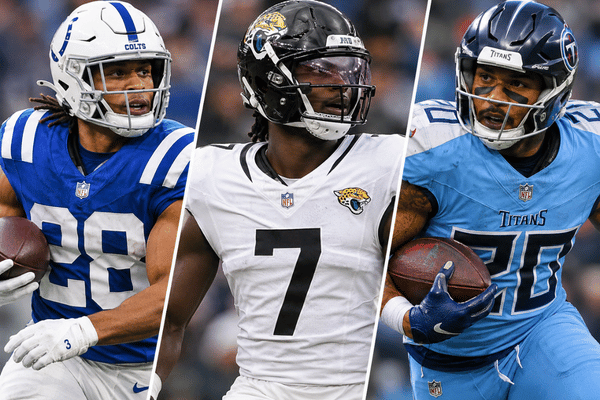
Jonathan Taylor, Brian Thomas Jr. and Tony Pollard remained with their respective teams, leaving questions about whether passing on those potential acquisitions could influence the playoff race.
For the Giants, Indianapolis Colts running back Jonathan Taylor represented a possible solution to their offensive challenges.
Taylor has established himself as one of the NFL’s most productive running backs, combining explosive rushing ability with the durability needed to handle a substantial workload.
Acquiring him, however, would have required a significant investment.
Indianapolis reportedly sought a first-round draft pick or comparable compensation, while New York was linked to a potential package involving a second-round selection, a fifth-round pick and another player.
Taylor’s contract presented another consideration. His two-year, $44 million extension made him one of the league’s highest-paid running backs, creating a substantial financial obligation for any interested team.
Adding Taylor could have provided New York with an immediate offensive centerpiece, but surrendering valuable draft capital would also have limited the franchise’s ability to address other roster needs.
The Rams faced a different problem as injuries threatened to undermine their passing attack.
Veteran receiver Davante Adams suffered a serious hamstring injury, while Puka Nacua dealt with multiple leg injuries. Their absences created uncertainty around an offense that depends heavily on quarterback Matthew Stafford and his receiving options.
Jacksonville Jaguars wide receiver Brian Thomas Jr. emerged as a potential answer.
Thomas delivered an impressive rookie campaign in 2024, finishing with 87 receptions, 1,282 receiving yards and 10 touchdowns. His production has since declined, raising questions about his role in Jacksonville’s offense.
A move to Los Angeles could have offered the young receiver a fresh opportunity while giving Stafford another talented target.
However, the Rams would have needed to weigh the immediate benefits against the cost of acquiring Thomas.
Limited salary cap flexibility and previously traded draft selections complicated the possibility of another major addition. A proposed deal involving a 2027 second-round pick would have further reduced the team’s future resources.
Jacksonville ultimately retained Thomas, leaving Los Angeles to navigate its receiving concerns without the benefit of a deadline acquisition.
Green Bay also had reason to explore offensive reinforcements.
The Packers entered the deadline struggling to establish a consistent rushing attack, placing additional pressure on their passing game.
The situation became more complicated when running back Josh Jacobs suffered a finger injury that required surgery.
Tennessee Titans running back Tony Pollard offered a possible solution.
Pollard had demonstrated his effectiveness with consecutive 100-yard rushing performances, making him an attractive option for a team seeking greater offensive balance.
A potential trade involving a conditional fourth-round selection in the 2027 NFL Draft could have provided Green Bay with an experienced contributor without requiring the sacrifice of a premium pick.
For Tennessee, moving Pollard might have created an opportunity to accumulate additional draft capital as the organization worked through a difficult season.
The Titans instead elected to retain the veteran running back, leaving the Packers to improve their ground game with the players already on their roster.
While those three potential deals attracted attention, other organizations took a more aggressive approach to the deadline.
Minnesota moved to reunite with quarterback Kirk Cousins, while Jacksonville strengthened its defense through multiple acquisitions.
Those transactions highlighted the different strategies teams adopted as the season approached its decisive stretch.
Some franchises prioritized immediate roster improvements, while others placed greater value on maintaining financial flexibility and preserving future draft selections.
For the Giants, Rams and Packers, the decision to avoid expensive trades may ultimately prove sensible.
Acquiring established players can provide an immediate boost, but significant contracts and the loss of valuable draft picks can create long-term challenges.
Still, the absence of additional reinforcements leaves each organization facing important questions.
New York must find greater consistency on offense without Taylor. Los Angeles needs its remaining receivers to step forward while key players recover. Green Bay must establish a more reliable rushing attack to complement its passing game.
With the trade deadline behind them, those teams have fewer options to address their weaknesses through outside acquisitions.
As the playoff race intensifies, the impact of their decisions will become increasingly apparent.
The biggest NFL deadline stories are usually defined by the players who change teams. This season, the players who stayed put could have an equally important influence on how the year unfolds.
